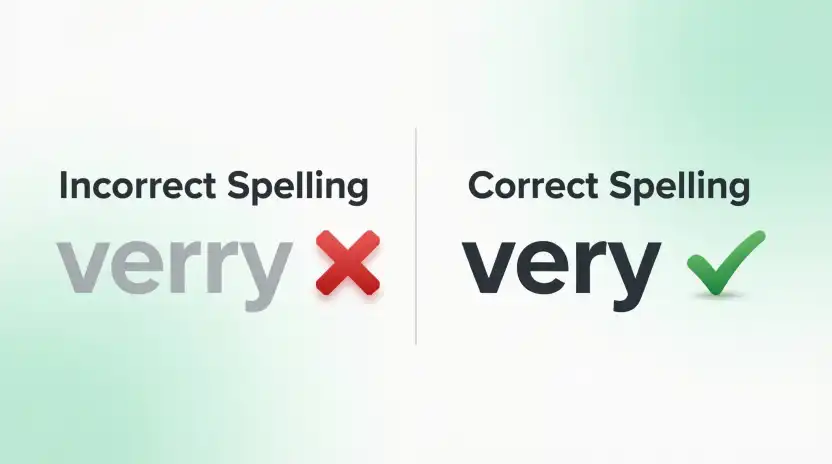
If you are wondering if “verry” or “very” is correct, the answer is very in modern standard English. Verry is not the normal modern spelling, so you should use very in schoolwork, emails, articles, business writing, and everyday English.
This spelling confusion is common because verry has appeared in older forms of English, and the extra r can look natural to learners who hear the word spoken. Historical sources show that verry was once an older spelling of very, but modern English has settled on very.
The word very usually means “to a great degree” or “extremely,” as in very good, very cold, or very carefully. It can also emphasize an exact person, thing, place, or time, as in the very same book.
Below, you will learn why very is correct, where the word came from, how it is used, common mistakes, and how to remember the spelling.
Very or Verry: Featured Snippet Answer
Very is the correct spelling in modern English. Verry is an obsolete historical spelling and should not normally be used in modern writing. Use very when you mean “to a great degree,” “extremely,” or when emphasizing an exact person or thing, such as very happy, very quickly, or the very book I wanted.
Very or Verry: Quick Answer
The correct modern spelling is very.
- ✅ Very = correct modern English
- ❌ Verry = obsolete or historical spelling
- Very can mean “extremely” or “to a great degree.”
- Very can also mean “exact” or “particular” before a noun.
- The pronunciation is essentially /ˈver.i/ in both British and American English.
Examples
- She is very happy.
- The test was very difficult.
- This is the very book I needed.
- He walked very slowly.
Wrong: She is verry happy.
Right: She is very happy.
What Does Very Mean?
Very is mainly an adverb used to make an adjective or another adverb stronger.
For example:
The water is very cold.
Here, very increases the strength of cold.
You can also use very before an adverb:
She speaks very clearly.
In this sentence, very makes clearly stronger.
Cambridge Dictionary defines very as a word used to emphasize an adjective or adverb, meaning “to a great degree” or “extremely.”
Very can also emphasize a noun
There is another important use:
This is the very place I remembered.
Here, very does not mean “extremely.” It means the exact or particular place.
Other examples include:
- the very same day
- the very first page
- the very end
- the very person we need
- the very idea of leaving
This second use is easy to miss because the meaning changes with context.
Very in simple English
Think of very as a strength word in sentences such as:
- very big
- very small
- very fast
- very slow
- very easy
- very difficult
- very beautiful
It tells the reader that something has a high degree of a quality.
The Origin of Very
The history of very is more interesting than its simple modern meaning suggests.
Merriam-Webster traces the word to Middle English forms including verray and verry. These came through Anglo-French verai, ultimately connected to Latin verus, meaning “true.”
The word did not begin with exactly the same meaning it has today.
Historically, very was connected with ideas such as “true,” “real,” or “genuine.” Over time, its meaning developed. By the Middle English period, the word had forms such as verray and verry.
The modern sense of very meaning “greatly” or “extremely” developed later. Etymonline dates this sense to around the mid-15th century.
This history explains why verry may sometimes appear in old texts. It was not simply a modern spelling mistake in every historical context.
Today, however, very is the standard spelling.
Why did verry disappear?
English spelling changed greatly over the centuries. Words were often written in several forms before modern spelling became more standardized.
Verry survived as an older spelling, but modern standard English uses very.
So if you encounter verry in an old document or historical text, do not automatically assume the writer made a mistake. The form has a documented historical use.
British English vs American English
There is no British-versus-American spelling difference between very and verry.
Both British and American English use very.
| British English | American English | Example |
| very | very | She is very happy. |
| very | very | It is very cold. |
| very | very | He works very quickly. |
| very | very | This is the very place. |
Cambridge lists the pronunciation of very in both UK and US English as /ˈver.i/.
What about verry?
Verry is not a standard British spelling or an American spelling variant.
If you are writing for a US audience, use very.
If you are writing for a UK audience, use very.
The same applies to Canadian, Australian, and international English.
Which Version Should You Use?
The answer is simple: use very.
United States
Use very in:
- School assignments
- Emails
- Resumes
- Business documents
- Websites
- Social media
- Academic writing
United Kingdom
Use very as well. British English does not normally use verry as an alternative spelling.
Canada
Use very in Canadian English.
Australia
Use very in Australian English.
International writing
If your audience includes English learners or readers from several countries, very is the safe standard form.
Academic writing
Use very when it accurately expresses your meaning, but do not rely on it too heavily.
For example:
The results were very important.
This is grammatically correct. However, depending on your subject, a more precise word such as significant, substantial, or critical may communicate the idea better.
Business writing
Very is perfectly acceptable:
We are very pleased with the results.
But professional writing often becomes stronger when you choose specific language rather than adding very repeatedly.
Common Mistakes With Very and Verry
Mistake 1: Writing verry instead of very
Incorrect:
Thank you verry much.
Correct:
Thank you very much.
Explanation: Verry is not the standard modern spelling.
Memory tip: Very has one R.
Mistake 2: Adding an extra R
Incorrect:
She is verry kind.
Correct:
She is very kind.
A useful spelling pattern is:
VE + R + Y = VERY
There is only one R.
Mistake 3: Confusing pronunciation with spelling
Some learners hear the /r/ sound strongly and may assume the spelling requires two Rs.
But pronunciation does not tell you that the word needs a double consonant.
The standard spelling remains very.
Mistake 4: Assuming verry is an American or British variant
It is not.
Very is used in both major varieties of modern English.
The difference is historical rather than a current US-versus-UK spelling rule.
Everyday Examples of Very
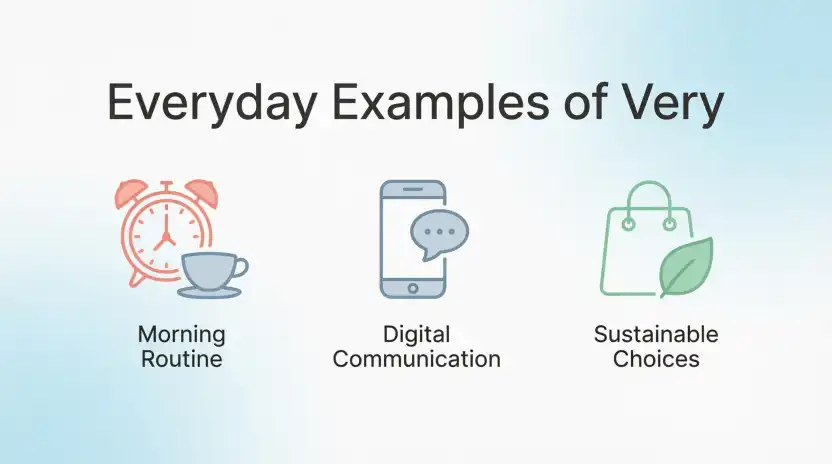
Emails
I am very pleased to hear from you.
Thank you very much for your help.
Business Writing
We are very happy with the final results.
The new system is very easy to use.
News Headlines
Headlines often avoid unnecessary words, but very may appear when emphasis is important.
Officials say the situation is very serious.
Blogs
This is a very simple way to improve your writing.
Social Media
I am very excited about this project!
Academic Writing
The difference was very clear in the final results.
In formal academic writing, however, a more precise adjective may sometimes be better than very.
Daily Conversation
I’m very tired.
That’s very interesting.
It was very cold yesterday.
Thank you very much.
Google Trends & Modern Usage
People search for “verry or very” because the two spellings look similar and verry has a historical connection with the word.
Modern dictionaries consistently recognize very as the standard current form. Cambridge gives very as an established English word and explains its use as an intensifier and as an adjective meaning exact or particular.
The historical form verry is also documented, which helps explain why someone may encounter it in older writing. Wiktionary describes verry in English as an obsolete spelling of very.
This means the search is not completely random. There is a genuine historical reason the spelling exists.
However, for modern writing, the practical rule is clear:
Use very.
I would not treat a specific Google Trends popularity number as reliable here without a current Trends dataset or direct query, so no exact regional search-volume statistics are claimed.
Quick Comparison Table
| Version | Meaning | Correct? | Region | Example |
| very | To a great degree; extremely | ✅ Yes | Modern English worldwide | She is very happy. |
| very | Exact or particular | ✅ Yes | Modern English worldwide | This is the very place. |
| verry | Historical spelling of very | ❌ Not standard today | Historical English | Found in older texts |
| verry | Modern alternative spelling | ❌ No | Not standard | Avoid in modern writing |
The important point is that verry is historically attested, but it is not the spelling you should choose for normal modern English.
Key Takeaways
- Very is the correct modern spelling.
- Verry is an obsolete historical spelling.
- Very can mean “extremely” or “to a great degree.”
- Very can also mean exact or particular before a noun.
- British and American English both use very.
- The word has roots in historical forms related to “true” and “real.”
- Do not use verry in normal modern writing.
- The easiest spelling tip is: very has one R.
FAQs
Is verry or very correct?
Very is correct in modern standard English. Verry is an obsolete historical spelling that can be found in older English sources. If you are writing an email, essay, article, business document, or social media post today, use very.
Is verry a real word?
Verry has existed as a historical spelling of very, so it is not simply an invented form. However, it is obsolete in modern English. Modern dictionaries use very as the standard spelling, so verry should normally be avoided in contemporary writing.
Why do people spell very as verry?
People may write verry because the extra r feels natural when they pronounce the word or because they have seen the historical spelling. It can also be a simple typing or spelling mistake. Modern English uses very, with only one r.
Is verry British English?
No. Verry is not a standard modern British English spelling. British English uses very, just like American English. Historical texts may contain verry, but that does not make it a current British spelling variation
Is verry American English?
No. American English uses very. The spelling verry is not a standard American variant. If you are writing for an American audience, write very happy, very good, very quickly, and similar expressions with one r.
What does very mean?
Very usually means “to a great degree” or “extremely.” For example, very cold means extremely cold or cold to a high degree. It can also emphasize an exact person or thing, as in the very same day.
How do you remember the spelling of very?
Use the simple memory rule: very has one R. Break the word into four letters: V-E-R-Y. If you find yourself writing V-E-R-R-Y, remove the second r. This works for normal modern English writing.
Can I use verry in formal writing?
No. Avoid verry in modern formal writing. Use very instead. This applies to academic papers, business emails, reports, resumes, websites, and professional communication. The historical spelling may appear when discussing old texts, but it is not appropriate as a modern spelling choice.
Does very have the same spelling in the UK and US?
Yes. There is no modern British-American spelling difference for this word. Both varieties use very. Cambridge gives the word in both UK and US English with the same basic pronunciation.
What is the difference between very and really?
Both can add emphasis, but they do not always work in exactly the same way. Very commonly modifies adjectives and adverbs, as in very cold or very quickly. Really can also intensify adjectives and adverbs and has additional uses. The best choice depends on the sentence and intended tone.
Conclusion
When choosing between verry or very, use very in modern English. It is the standard spelling in American English, British English, Canadian English, Australian English, and international English.
Verry is worth knowing because it has a historical connection to the word. Older forms of English included spellings such as verray and verry, and the word’s history can be traced through Anglo-French to Latin roots associated with “true.”
Today, however, there is no reason to use the extra r in ordinary writing.
Write:
She is very happy.
Not:
She is verry happy.
The word very can mean “extremely” or “to a great degree,” and it can also emphasize an exact person or thing, as in the very same book.
Remember: one R, one correct modern spelling: very.
Read more about!
- Bose or Beats: Which Headphones Are Better?
- Prefix or Suffix: Meaning, Differences, Examples, and Usage

I’m Olivia Parker, a grammar and English writing enthusiast passionate about making English simple and easy to understand. Through Wordsblog, I share clear explanations, useful grammar tips, and practical writing guidance to help readers write with confidence. My goal is to make learning English easier, one word at a time.





9 thoughts on “Verry or Very: Which Spelling Is Correct?”