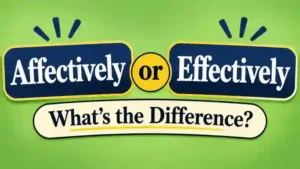
Affectively and effectively are both real English words, but they have different meanings and uses.
Effectively means successfully, efficiently, or in a way that produces the desired result. Affectively relates to emotions, feelings, or emotional responses. For example, “She effectively managed the project” means she managed it successfully.
On the other hand, “The study examined how people respond affectively to music” refers to their emotional reactions.
People often confuse these words because they look and sound similar. However, they are not interchangeable.
Effectively is much more common in everyday English, business writing, education, and professional communication. Affectively is mainly used in psychology, education, and academic discussions about emotions.
Understanding the difference helps you choose the correct word and avoid confusing your readers. This guide explains both meanings, provides simple examples, and shows when to use affectively or effectively.
Quick Answer: Affectively vs. Effectively
- Affectively: Relates to emotions, feelings, or emotional responses.
- Effectively: Means successfully, efficiently, or with the intended result.
Examples:
- She communicated effectively with her team.
- Children may respond affectively to emotional situations.
Easy memory tip: Use affectively when discussing feelings. Use effectively when discussing successful results.
What Does Affectively Mean?
Affectively is an adverb formed from the adjective affective. It describes something related to emotions, feelings, moods, or emotional responses.
The word is mainly used in academic, psychological, educational, and scientific contexts. It often describes how people experience or respond to emotional situations.
Examples of affectively in sentences:
- Children may respond affectively to emotional stories.
- The research examined how students react affectively to classroom activities.
- People can respond affectively to music and art.
- The teacher considered the affectively important aspects of learning.
- Emotional experiences can influence how people react affectively.
In these examples, affectively refers to feelings or emotional reactions rather than success or efficiency.
When Should You Use Affectively?
Use affectively when discussing:
- Emotional responses.
- Human feelings and moods.
- Psychological experiences.
- Emotional aspects of learning.
- Reactions to music, art, or personal experiences.
Example:
“The researchers studied how people respond affectively to different types of music.”
This means the researchers examined people’s emotional reactions to music.
What Does Effectively Mean?
Effectively is an adverb that means successfully, efficiently, or in a way that produces the intended result.
It describes how someone performs an action or how well something works. It is common in everyday conversations, business communication, education, and professional writing.
Examples of effectively in sentences:
- She effectively managed the entire project.
- The teacher explained the lesson effectively.
- We need to communicate more effectively.
- This strategy helps businesses use their resources effectively.
- He effectively solved the problem.
In these examples, effectively describes how successfully an action is performed.
When Should You Use Effectively?
Use effectively when discussing:
- Successful communication.
- Efficient work.
- Problem-solving.
- Business strategies.
- Teaching and learning methods.
- Actions that produce desired results.
Example:
“She effectively explained the new rules to the students.”
This means she explained the rules successfully and clearly.
Affectively vs. Effectively: Key Differences
Although these words look similar, their meanings are quite different.
| Feature | Affectively | Effectively |
|---|---|---|
| Meaning | In an emotional way | Successfully or efficiently |
| Root word | Affective | Effective |
| Main connection | Feelings and emotions | Results and performance |
| Part of speech | Adverb | Adverb |
| Common usage | Psychology and academic writing | Everyday and professional English |
| Example | She responded affectively. | She worked effectively. |
The easiest way to remember the difference is that affectively relates to emotions, while effectively relates to successful results.
Affectively vs. Effectively: Understanding Their Root Words
Understanding the root words makes the difference easier to remember.
1. Affective and Affectively
Affective is an adjective related to feelings and emotions. Adding the suffix -ly creates the adverb affectively.
Examples:
- Affective response: An emotional reaction.
- Affective learning: Learning that involves feelings and emotions.
- Respond affectively: Respond in an emotional way.
Sentence: The researchers examined the affective responses of children.
2. Effective and Effectively
Effective is an adjective that describes something successful or capable of producing the desired result. Adding -ly creates effectively.
Examples:
- Effective communication: Communication that achieves its purpose.
- Effective strategy: A strategy that produces useful results.
- Work effectively: Work successfully or efficiently.
Sentence: The manager communicated effectively with employees.
Why Do People Confuse Affectively and Effectively?

People often mix up affectively and effectively because they have similar spellings and pronunciations. Both words also come from root words that begin with similar letters.
Here are some common reasons for the confusion:
1. Similar spelling: Both words contain many of the same letters.
2. Similar pronunciation: Their beginnings can sound alike in everyday speech.
3. Unfamiliar meaning: Affectively is less common, so some readers may not recognize it.
4. Word choice: People may choose effectively when they actually want to describe an emotional response.
The best way to avoid mistakes is to understand what you want to express before choosing the word.
Common Mistakes When Using Affectively or Effectively
Using the wrong word can change the meaning of a sentence.
| Incorrect or Confusing Sentence | Better Sentence | Explanation |
|---|---|---|
| She managed the team affectively. | She managed the team effectively. | The sentence describes successful management. |
| The study examined how children responded effectively to music. | The study examined how children responded affectively to music. | The focus is on emotional responses. |
| He communicated affectively with his customers. | He communicated effectively with his customers. | The intended meaning is successful communication. |
| The research measured students’ emotional responses effectively. | The research measured students’ emotional responses affectively. | The word describes the emotional nature of the responses, although the sentence may need rewriting for clarity. |
Important: Affectively is not simply another spelling of effectively. Use each word according to its meaning.
Everyday Examples of Affectively and Effectively
These examples show how the two words work in different situations.
| Affectively | Effectively |
|---|---|
| She responded affectively to the sad story. | She explained the story effectively. |
| The children reacted affectively to the music. | The teacher taught the lesson effectively. |
| He experienced the situation affectively. | He handled the situation effectively. |
| The study explored how people react affectively. | The study presented its findings effectively. |
| Students may engage affectively with a story. | Students can communicate effectively in class. |
Notice that affectively focuses on emotional experiences, while effectively focuses on how successfully something is done.
Affectively vs. Effectively: Which Word Should You Use?
Choosing the right word depends on the meaning of your sentence.
| If You Mean… | Use | Example |
|---|---|---|
| Emotional reaction | Affectively | She responded affectively. |
| Successful communication | Effectively | He communicated effectively. |
| Feelings about music | Affectively | They reacted affectively to the song. |
| Efficient work | Effectively | She completed the task effectively. |
| Emotional learning | Affectively | Students engaged affectively with the material. |
| Producing good results | Effectively | The method worked effectively. |
If your sentence is about emotions, affectively may be appropriate. If it is about success, efficiency, or results, effectively is usually the correct choice.
Is Affectively a Real Word?
Yes, affectively is a real English word. It is the adverb form of affective and relates to feelings, emotions, and emotional responses.
However, it is less common than effectively. You are more likely to encounter affectively in academic writing, psychology, education, and research.
For example:
“The researchers examined how participants responded affectively to the images.”
Here, affectively describes the participants’ emotional responses.
Do not confuse affectively with affect as a verb, which usually means to influence something.
Key Takeaways
- Affectively and effectively are both real English words.
- Affectively relates to emotions, feelings, and emotional responses.
- Effectively means successfully, efficiently, or with the intended result.
- Both words are adverbs.
- Affectively is more common in academic and psychological contexts.
- Effectively is widely used in everyday and professional communication.
- Choose affectively for emotional reactions and effectively for successful actions.
Frequently Asked Questions
1. What is the difference between affectively and effectively?
Affectively relates to emotions and feelings, while effectively means successfully or efficiently. They have different meanings and cannot be used interchangeably.
2. Is affectively a real word?
Yes. Affectively is a recognized English adverb formed from affective. It describes something related to emotional experiences or responses.
3. Is effectively a real word?
Yes. Effectively is a common English adverb meaning successfully, efficiently, or in a way that produces the desired result.
4. When should I use affectively?
Use affectively when describing emotional reactions, feelings, moods, or psychological experiences. For example, “The children responded affectively to the story.”
5. When should I use effectively?
Use effectively when describing successful actions, communication, problem-solving, or efficient performance. For example, “She managed the project effectively.”
6. Are affectively and effectively interchangeable?
No. Affectively describes emotional responses, while effectively describes successful or efficient actions. Using one instead of the other can change the meaning of a sentence.
7. Is affectively commonly used in everyday English?
Not very often. Affectively is more common in psychology, education, research, and academic writing. Effectively appears much more frequently in everyday communication.
8. What is the root word of affectively?
The root word is affective, an adjective related to emotions and feelings. Adding the suffix -ly forms the adverb affectively.
9. What is the root word of effectively?
The root word is effective, an adjective meaning successful or capable of producing a desired result. Adding -ly creates effectively.
10. How can I remember the difference between affectively and effectively?
Connect affectively with affective experiences and emotions. Connect effectively with effective results and successful actions. This simple connection will help you choose the correct word.
Conclusion
Affectively and effectively may look similar, but they have different meanings. Affectively describes something connected to feelings, emotions, or emotional responses. Effectively describes an action performed successfully or efficiently.
Use affectively when discussing emotional experiences, especially in psychology, education, or research. Use effectively when talking about successful communication, problem-solving, work, or performance. Remember this simple rule: affectively is about feelings, while effectively is about results. Understanding this difference will help you use both words correctly and make your writing clearer.
Read more about!
- Uneligible or Ineligible: Which Spelling Is Correct?
- Oxford or Cambridge: Which University Is Better?
- Colors or Colours: Which Spelling Is Correct?

I’m Olivia Parker, a grammar and English writing enthusiast passionate about making English simple and easy to understand. Through Wordsblog, I share clear explanations, useful grammar tips, and practical writing guidance to help readers write with confidence. My goal is to make learning English easier, one word at a time.