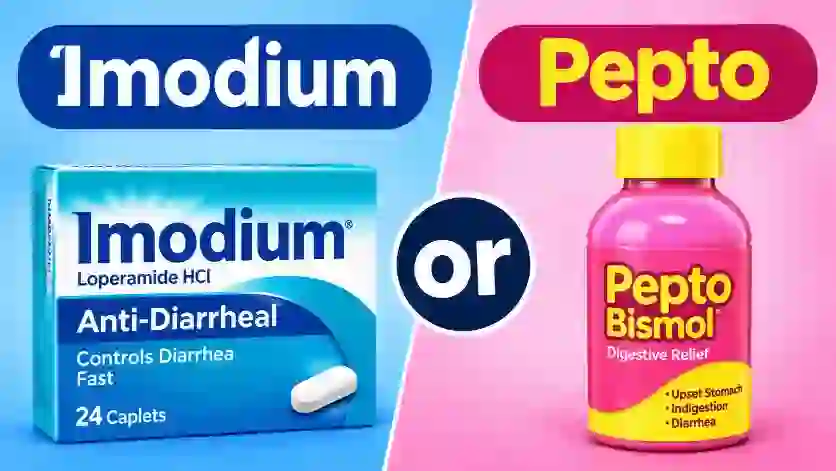
Imodium and Pepto-Bismol are both medicines used to treat diarrhea, but they work in different ways. Imodium contains loperamide, which slows down bowel movement and helps reduce loose stools. Pepto-Bismol contains bismuth subsalicylate, which helps relieve diarrhea and can also ease nausea, indigestion, and an upset stomach.
People often compare Imodium and Pepto-Bismol because both are available without a prescription in many places.
However, they are not interchangeable for every stomach problem. Imodium is mainly used to control diarrhea, while Pepto-Bismol can help with several digestive symptoms. The better option depends on your symptoms, age, medical history, and other medicines you take.
This guide explains the differences between Imodium and Pepto, how each medicine works, their benefits, side effects, and when to avoid them. It also covers important safety information so you can make a more informed decision.
Quick Answer: Imodium vs. Pepto
- Imodium: Contains loperamide and slows bowel movement to reduce diarrhea.
- Pepto-Bismol: Contains bismuth subsalicylate and can help relieve diarrhea, nausea, indigestion, and upset stomach.
- For diarrhea: Either may help, depending on the cause and your symptoms.
- For nausea or indigestion: Pepto-Bismol may be more suitable.
- For frequent loose stools: Imodium is specifically designed to reduce bowel movements.
Important: Neither medicine treats every cause of diarrhea. Oral rehydration solutions are important for replacing lost fluids and salts.
What Is Imodium?
Imodium is an anti-diarrhea medicine. Its active ingredient is loperamide, which slows the movement of food and waste through the intestines. This gives the body more time to absorb water, making stools firmer and reducing how often you need to use the toilet.
NHS+1
Imodium is mainly used for short-term diarrhea. It may also be prescribed for certain longer-lasting bowel conditions, but that should be managed by a healthcare professional.
Benefits of Imodium
- Helps reduce the frequency of loose bowel movements.
- Helps make watery stools firmer.
- Can provide short-term relief when diarrhea interferes with daily activities.
- Usually starts helping within about one hour.
NHS+1
Possible Side Effects of Imodium
Some people may experience:
- Constipation
- Nausea
- Headache
- Dizziness
- Wind or stomach discomfort
Taking more than the recommended amount can cause serious heart problems. Always follow the product instructions and never exceed the stated dose.
NHS+1
What Is Pepto-Bismol?
Pepto-Bismol is a medicine that contains bismuth subsalicylate. It is used to relieve several digestive symptoms, including diarrhea, nausea, indigestion, and an upset stomach.
It works differently from Imodium. Bismuth subsalicylate helps reduce inflammation and provides a protective coating in parts of the digestive tract.
NHS
Benefits of Pepto-Bismol
Pepto-Bismol may help with:
- Diarrhea
- Nausea
- Indigestion
- Upset stomach
- Heartburn and acid reflux symptoms
This makes it useful when diarrhea occurs alongside other digestive complaints.
NHS
Possible Side Effects of Pepto-Bismol
Common side effects include:
- A temporarily black tongue
- Black stools
- Constipation in some people
A black tongue or stool can be a harmless effect of the medicine. However, black or tarry stools can also indicate bleeding. If you are unsure, particularly if you have pain, weakness, or dizziness, seek medical advice rather than assuming it is caused by Pepto.
NHS+1
Imodium vs. Pepto: Key Differences
Although both medicines can help with diarrhea, they contain different active ingredients and work in different ways.
| Feature | Imodium | Pepto-Bismol |
| Active ingredient | Loperamide | Bismuth subsalicylate |
| Main purpose | Controls diarrhea | Relieves several digestive symptoms |
| How it works | Slows bowel movement | Helps protect the digestive tract and reduce inflammation |
| Helps with diarrhea | Yes | Yes |
| Helps with nausea | Not its main use | Yes |
| Helps with indigestion | Not its main use | Yes |
| Common side effects | Constipation, nausea, dizziness | Black tongue, black stools |
| Important caution | Avoid in certain infections or when warning symptoms are present | Avoid with certain salicylate allergies and medicine interactions |
The main difference is that Imodium focuses on slowing diarrhea, while Pepto-Bismol can help with a wider range of stomach symptoms.
Imodium or Pepto: Which Works Better for Diarrhea?
Both medicines can help relieve diarrhea, but the better choice depends on your symptoms and health circumstances.
Imodium may be more suitable when:
- You mainly have frequent loose or watery stools.
- You need short-term control of bowel movements.
- You do not have warning symptoms such as blood in your stool or a fever.
Pepto-Bismol may be more suitable when:
- You have diarrhea along with nausea.
- You also have indigestion or an upset stomach.
- You are an appropriate candidate for a medicine containing bismuth subsalicylate.
Neither medicine is suitable for every type of diarrhea. If you have a fever, blood in your stool, severe abdominal pain, or significant dehydration, seek medical advice instead of trying to control the symptoms yourself.
NHS+2
Can You Take Imodium and Pepto-Bismol Together?
Do not assume that taking both medicines together is safe or necessary. They have different active ingredients, and combining medicines can increase the chance of side effects or create problems depending on your medical history and other treatments.
Ask a pharmacist or doctor before combining them. This is especially important if you take prescription medicines, have a long-term health condition, or are unsure what is causing your diarrhea.
If you are already taking either medicine and your symptoms are getting worse, seek medical advice rather than adding another treatment.
When Should You Avoid Imodium or Pepto-Bismol?
Both medicines have important precautions.
When to Avoid Imodium
Loperamide may not be suitable if you:
- Have blood in your stool and a high temperature.
- Have severe diarrhea after taking antibiotics.
- Have a flare-up of ulcerative colitis or another inflammatory bowel condition.
- Are constipated or have a swollen abdomen.
Speak to a healthcare professional before using it if you have liver problems or other relevant medical conditions. Do not give over-the-counter loperamide to children under 12 unless a doctor prescribes it.
NHS+1
When to Avoid Pepto-Bismol
Pepto-Bismol may not be suitable if you:
- Are allergic to aspirin or bismuth subsalicylate.
- Have a bleeding or blood-clotting disorder.
- Have blood in your stool.
- Take blood-thinning medicines or certain other interacting medicines.
- Are pregnant or breastfeeding without first getting professional advice.
In the UK, NHS guidance says Pepto-Bismol should not be given to children aged 15 or under because of the risk of Reye’s syndrome.
NHS+1
Imodium vs. Pepto: Age and Dosage Considerations
Age restrictions and recommended doses depend on the product, formulation, and country. Always read the leaflet supplied with your medicine.
For general UK guidance:
| Medicine | Age Guidance |
| Loperamide (Imodium) | Available without prescription for short-term diarrhea in people aged 12 and over |
| Pepto-Bismol | Generally suitable for adults and people aged 16 and over |
The NHS advises that over-the-counter loperamide should not be used for more than 48 hours without speaking to a doctor. Pepto-Bismol should not be taken for more than two days unless a doctor advises otherwise.
NHS+2
Important: These are general UK guidelines, not personal dosing instructions. Follow the exact package directions for your product. If you are buying medicine in another country, check its local label because age limits and instructions may differ.
What Helps More Than Medicine When You Have Diarrhea?
Medicine can help control symptoms, but replacing lost fluids is one of the most important parts of managing diarrhea.
Consider these steps:
- Drink plenty of fluids. Take frequent small sips of water.
- Use oral rehydration solutions. Pharmacy rehydration sachets help replace water and essential salts.
- Eat when you feel ready. Choose simple foods if you have an upset stomach.
- Avoid dehydration. Watch for dark urine, dizziness, dry mouth, or urinating less than usual.
- Wash your hands. Good hygiene helps prevent the spread of stomach infections.
Oral rehydration is particularly important for children, older adults, and people at greater risk of dehydration.
NHS+1
When Should You See a Doctor?
Diarrhea often improves without special treatment, but some symptoms need medical attention.
Contact a healthcare professional if you experience:
- Blood in your stool.
- A high temperature with diarrhea.
- Severe or persistent abdominal pain.
- Signs of dehydration, such as dark urine or dizziness.
- Diarrhea that continues or gets worse.
- Repeated vomiting that prevents you from keeping fluids down.
In the UK, contact NHS 111 for urgent advice when appropriate. Seek emergency help for severe symptoms such as confusion, collapse, or severe abdominal pain.
NHS+1
Common Mistakes When Choosing Imodium or Pepto
People sometimes choose a diarrhea medicine without considering their other symptoms or health conditions.
| Common Mistake | Better Approach |
| Assuming both medicines work the same way | Understand their different active ingredients. |
| Using Imodium for every type of diarrhea | Check for fever, blood, and other warning signs first. |
| Taking Pepto for too long | Follow the package instructions and seek advice if symptoms continue. |
| Ignoring dehydration | Replace lost fluids and salts. |
| Giving adult medicine to children | Check age restrictions and ask a pharmacist or doctor. |
| Combining both medicines without advice | Ask a healthcare professional before using them together. |
Key Takeaways
- Imodium contains loperamide and slows bowel movement.
- Pepto-Bismol contains bismuth subsalicylate.
- Imodium mainly helps control diarrhea.
- Pepto-Bismol can help with diarrhea, nausea, indigestion, and an upset stomach.
- Both medicines can cause side effects and have important safety restrictions.
- Neither medicine replaces fluids and electrolytes lost through diarrhea.
- Avoid self-treating diarrhea with these medicines if you have blood in your stool, a fever, or severe symptoms.
- Always follow the product label and ask a pharmacist if you are unsure which medicine is suitable.
Frequently Asked Questions
1. Is Imodium better than Pepto-Bismol for diarrhea?
Imodium may be more suitable when your main problem is frequent loose stools. Pepto-Bismol may be useful when diarrhea occurs with nausea or indigestion. The right choice depends on your symptoms and medical history.
2. What is the main difference between Imodium and Pepto?
Imodium contains loperamide, which slows bowel movement. Pepto-Bismol contains bismuth subsalicylate, which helps relieve several digestive symptoms.
3. Does Pepto-Bismol stop diarrhea?
Yes. Pepto-Bismol can help relieve diarrhea. It may also help with nausea, indigestion, and an upset stomach.
4. How quickly does Imodium work?
Loperamide usually starts improving diarrhea within about one hour, although the response varies from person to person.
NHS
5. Can I take Imodium and Pepto-Bismol together?
Do not combine them without checking with a pharmacist or doctor. They have different ingredients, and your other medicines and health conditions may affect if the combination is appropriate.
6. Which is better for diarrhea with nausea?
Pepto-Bismol may be more suitable because it can relieve both diarrhea and nausea. However, persistent vomiting or an inability to keep fluids down needs medical advice.
7. Does Pepto-Bismol make your stool black?
Yes. Pepto-Bismol can temporarily turn your stool black. This is usually harmless, but black or tarry stool can also indicate bleeding. Seek medical advice if you are uncertain or have other concerning symptoms.
8. Can children take Imodium or Pepto-Bismol?
Age restrictions differ. In the UK, over-the-counter loperamide is generally available for people aged 12 and over, while Pepto-Bismol should not be given to children aged 15 or under. Ask a pharmacist or doctor before giving diarrhea medicine to a child.
NHS+1
9. Which medicine is better for an upset stomach?
Pepto-Bismol may be more suitable for an upset stomach accompanied by indigestion or nausea. Imodium is mainly intended to control diarrhea.
10. What should I drink when I have diarrhea?
Drink water regularly. Oral rehydration solutions are especially useful because they replace fluids and salts lost through diarrhea.
Conclusion
Imodium and Pepto-Bismol both help relieve diarrhea, but they work differently. Imodium contains loperamide and mainly reduces frequent bowel movements. Pepto-Bismol contains bismuth subsalicylate and can help with diarrhea, nausea, indigestion, and an upset stomach.
If diarrhea is your only symptom, Imodium may be an option for suitable adults. If you also have nausea or indigestion, Pepto-Bismol may be worth considering if it is safe for you. However, neither medicine is right for everyone.
Always check the warnings, follow the package instructions, and focus on replacing lost fluids. Seek medical advice if symptoms are severe, persistent, or accompanied by warning signs.
Read more about!
- Uneligible or Ineligible: Which Spelling Is Correct?
- Oxford or Cambridge: Which University Is Better?
- Colors or Colours: Which Spelling Is Correct?

I’m Olivia Parker, a grammar and English writing enthusiast passionate about making English simple and easy to understand. Through Wordsblog, I share clear explanations, useful grammar tips, and practical writing guidance to help readers write with confidence. My goal is to make learning English easier, one word at a time.