Bacon or sausage depends on your taste, meal, and cooking needs, because bacon is usually cured pork belly while sausage is seasoned ground meat in a casing or similar form. Both are popular breakfast foods, but they have different textures, flavors, shapes, and cooking methods.
People often search for bacon or sausage when choosing what to eat for breakfast, planning a recipe, or comparing the two meats. The confusion is understandable because both are common breakfast choices and can appear on the same plate.
Bacon is usually thin and cooks quickly. It becomes crisp when fried or baked. Sausage is often made from ground meat mixed with seasonings. It can be sold as links, patties, or other forms.
The two also differ in how they are prepared and served. Bacon often adds a salty, smoky taste to eggs, burgers, sandwiches, and salads. Sausage can bring a richer, spiced flavor to breakfast plates, pasta, pizza, and many other dishes.
In this guide, we will compare bacon and sausage in simple terms. You will learn what each food is, where the names came from, how they differ, and when to use each one.
Bacon or Sausage – Quick Answer
Bacon and sausage are both processed meat products, but they are made differently and have different textures and flavors.
- Bacon: Usually made from pork belly and often cured before cooking.
- Sausage: Usually made from ground meat mixed with seasonings.
- Bacon: Often thin, flat, and crisp.
- Sausage: Often comes as links or patties and has a softer, meatier texture.
When should you choose bacon?
Choose bacon when you want:
- A crisp texture
- A salty and smoky flavor
- A quick breakfast side
- A topping for burgers or sandwiches
When should you choose sausage?
Choose sausage when you want:
- A seasoned meat flavor
- A softer or firmer meat texture
- Breakfast links or patties
- An ingredient for pasta, pizza, or casseroles
Definition and Meaning of Bacon or Sausage
The words bacon and sausage describe different types of meat products. Although both can be served at breakfast, their preparation and form are different.
What is bacon?
Bacon is a meat product commonly made from pork belly. It is often cured with salt and may be smoked before it is cooked.
Bacon is usually sold in thin strips. It can be fried, baked, or cooked in other ways.
Common uses include:
- Breakfast with eggs
- Bacon sandwiches
- Burgers
- Salads
- Soups
- Baked dishes
What is sausage?
Sausage can appear in different forms, including:
- Links
- Patties
- Ground sausage
- Fresh sausage
- Cooked sausage
The flavor can vary widely because different sausages use different herbs, spices, and preparation methods.
Bacon vs sausage
| Feature | Bacon | Sausage |
| Common form | Thin strips | Links, patties, or ground meat |
| Common meat | Pork | Pork, beef, poultry, and others |
| Texture | Often crisp when cooked | Usually tender or firm |
| Flavor | Salty, savory, sometimes smoky | Savory and often seasoned |
| Common meal | Breakfast | Breakfast, lunch, dinner |
| Common uses | Sandwiches, burgers, salads | Pasta, pizza, casseroles, breakfast |
The exact ingredients and preparation can vary by product, so the package label is the best source for a specific product.
The Origin of Bacon or Sausage
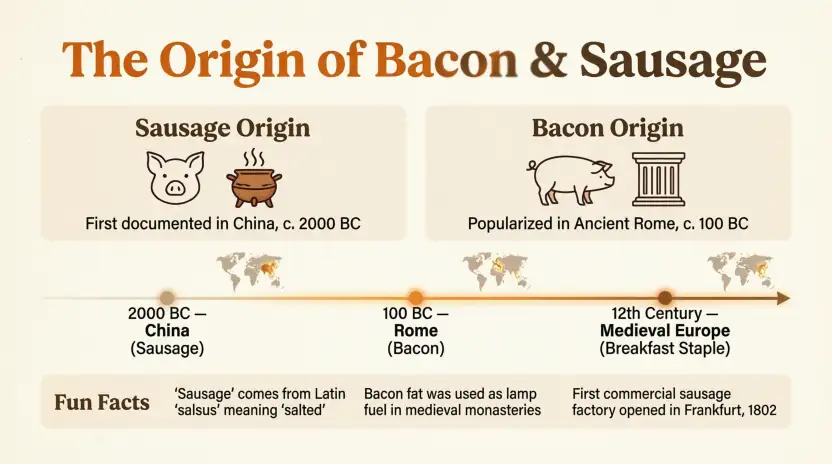
The history of bacon and sausage goes back many centuries. Both developed as ways to prepare and preserve meat.
Where does the word bacon come from?
The English word bacon has Germanic roots and is related to older words for the back or side of a pig.
Over time, bacon became associated with cured pork products. The exact style of bacon differs between countries.
In modern American English, bacon commonly refers to strips cut from pork belly.
Where does the word sausage come from?
The word sausage comes through Old French and Latin. It is related to the Latin word salsus, meaning salted.
This connection makes sense because salt has long been important in preserving and seasoning meat.
Sausage developed in many regions, and different cultures created their own styles.
Why are there so many types?
Meat preservation was an important reason for developing products such as bacon and sausage. Salt, smoking, drying, and other methods helped people store meat for longer periods.
As food traditions developed, different regions created their own recipes and preparation methods.
That is why bacon and sausage can look and taste very different around the world.
British English vs American English Spelling
There is no major British-American spelling difference for these two words.
| British English | American English | Example |
| bacon | bacon | I ordered bacon. |
| sausage | sausage | She cooked sausage. |
| bacon sandwich | bacon sandwich | British usage |
| sausage roll | sausage roll | Common British term |
| bacon strips | bacon strips | Common American usage |
British English usage
In the UK, bacon often refers to back bacon or other regional styles. The word sausage covers many types of sausages.
British food terms can also differ from American food terms.
American English usage
In the US, bacon commonly means strips of pork belly bacon.
Does spelling change?
No. Both major English varieties spell these words as:
bacon
sausage
The differences are more about food traditions, preparation, and the names of particular products.
Which Spelling Should You Use?
You can use bacon and sausage in both American and British English. The spelling is standard in each variety.
United States
Use bacon and sausage. These are the normal terms in menus, recipes, stores, and everyday conversation.
United Kingdom and Commonwealth
Use bacon and sausage. Regional food types may differ, but the spelling stays the same.
International writing
If your audience may not know a specific food type, add a short description.
Academic writing
Use the standard terms and describe the food clearly when discussing nutrition, food history, or food science.
Business writing
For menus, product descriptions, and food content, use the exact product name provided by the manufacturer or supplier.
Common Mistakes with Bacon or Sausage
Because these foods have many varieties, mistakes often involve meaning rather than spelling.
Mistake 1: Treating all sausage as the same
Incorrect: All sausage is made from pork.
Correct: Sausage can be made from different types of meat.
The ingredients depend on the specific sausage.
Mistake 2: Assuming all bacon is identical
Different countries and products use different cuts and preparation methods.
Always check the product description when the exact type matters.
Mistake 3: Using “bacon” for sausage
Bacon and sausage are not interchangeable terms.
Mistake 4: Thinking the spelling changes by country
Bacon and sausage have the same spelling in British and American English.
Easy memory tip
Think:
Bacon = strips
Sausage = seasoned meat, often in links or patties
This is not true for every variety, but it is a useful basic guide.
Bacon or Sausage in Everyday Examples
These words appear often in everyday speech, recipes, menus, news, blogs, and social media.
1. Emails
Could you pick up some bacon or sausage for breakfast?
This is a natural way to use both terms.
2. Business writing
Our breakfast menu includes bacon, sausage, eggs, and toast.
Food businesses often use both words in menus and product descriptions.
3. News headlines
Bacon and Sausage Prices Rise
News articles may use the terms when discussing food prices, farming, or consumer trends.
4. Blogs
Bacon or sausage can make a simple breakfast more filling.
Food bloggers often compare the flavor, texture, and cooking methods of both foods.
5. Social media
Bacon or sausage? Which one belongs on your breakfast plate?
This type of question is common in informal social content.
6. Academic writing
Bacon and sausage are examples of processed meat products.
Academic writing should define terms clearly when the exact food category matters.
7. Daily conversation
Do you want bacon or sausage with your eggs?
This is one of the most natural everyday uses of the phrase.
Bacon or Sausage – Google Trends & Usage Data
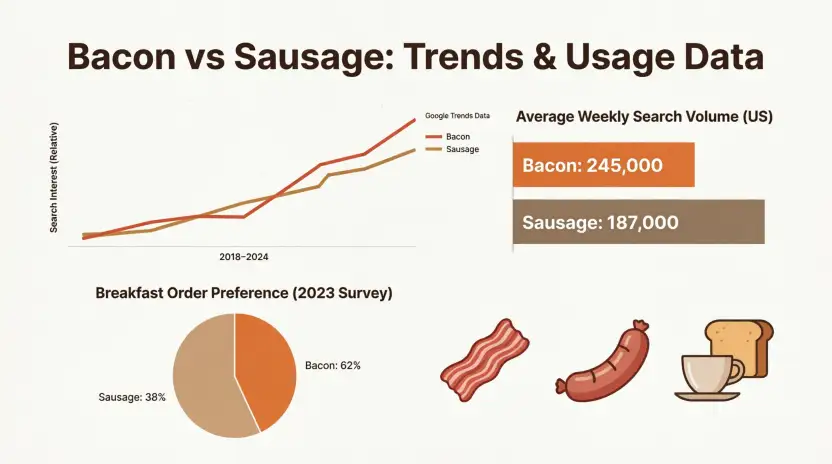
The search phrase bacon or sausage reflects a simple comparison intent. People may use it when choosing breakfast foods, comparing ingredients, planning recipes, or discussing food preferences.
Search interest can vary by country and season. Food-related searches may also increase around holidays, breakfast recipes, restaurant menus, and cooking trends.
Search interest also does not necessarily show which food people prefer.
Why do people search for bacon or sausage?
Common reasons include:
- Breakfast choices
- Recipe planning
- Taste comparisons
- Cooking questions
- Restaurant menus
- Food substitutions
- Nutrition research
- Shopping decisions
Modern usage
Both words are extremely common in modern English.
You may see them in:
- Recipe websites
- Restaurant menus
- Grocery listings
- Food blogs
- Social media
- Cooking videos
- News reports
- Everyday conversation
The phrase bacon or sausage is especially useful when the reader wants to compare two familiar breakfast foods.
Quick Comparison Table
| Version | Meaning | Correct? | Region | Example |
| Bacon | Commonly cured pork product | Yes | US, UK, International | I want bacon. |
| Sausage | Seasoned meat product, often ground | Yes | US, UK, International | I want sausage. |
| Bacon or sausage | Choice between two foods | Yes | International | Bacon or sausage with eggs? |
| Bacon vs sausage | Direct comparison | Yes | International | Bacon vs sausage for breakfast |
| Bacon strips | Usually sliced bacon | Yes | Common in US | Cook the bacon strips. |
| Sausage links | Sausage in link form | Yes | Common in US | Add two sausage links. |
FAQs
1. Is bacon or sausage better?
It depends on your taste and meal. Bacon is often crisp and salty, while sausage is usually seasoned and meatier.
2. What is the main difference between bacon and sausage?
Bacon is commonly made from cured pork cuts, while sausage is usually made from ground meat mixed with seasonings.
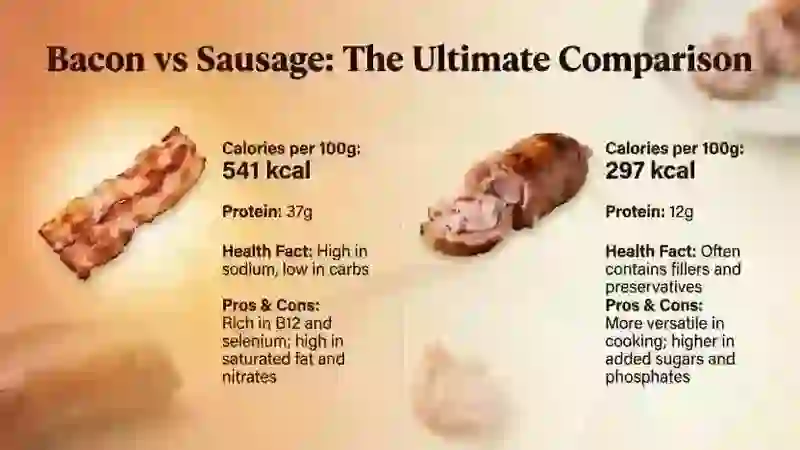
3. Is bacon healthier than sausage?
Neither is automatically healthier. Nutrition varies by product, so check calories, saturated fat, sodium, and serving size on the label.
4. Can I use bacon instead of sausage?
Sometimes. The result will change because bacon and sausage have different textures, flavors, and forms.
5. Are bacon and sausage the same thing?
No. They are different meat products. Bacon is commonly sliced into strips, while sausage is usually made from seasoned ground meat.
6. Is bacon spelled differently in British English?
No. Bacon has the same spelling in British and American English.
7. Is sausage spelled differently in American English?
No. Sausage is spelled the same in British and American English.
Conclusion
Bacon or sausage is a common food comparison, but the two are not the same product.Bacon often becomes crisp when cooked and adds a salty, savory flavor. Sausage usually has a softer or firmer meat texture and can have many different seasonings.
Both can work well in breakfast meals, sandwiches, burgers, pasta, pizza, and other recipes.
The spelling is simple too. The main differences between regional varieties involve food styles and preparation rather than spelling.
When choosing between them, think about the flavor and texture you want. For a crisp and salty bite, bacon may fit the dish. For a seasoned and hearty meat flavor, sausage may be more suitable.
The simple rule is: bacon brings crisp strips, while sausage brings seasoned meat in many forms.
Read more about!
- Buried or Cremated: What Is the Difference?
- Dose or Dosage: What Is the Difference?
- Fabric or Forge: What Is the Difference?

I’m Olivia Parker, a grammar and English writing enthusiast passionate about making English simple and easy to understand. Through Wordsblog, I share clear explanations, useful grammar tips, and practical writing guidance to help readers write with confidence. My goal is to make learning English easier, one word at a time.