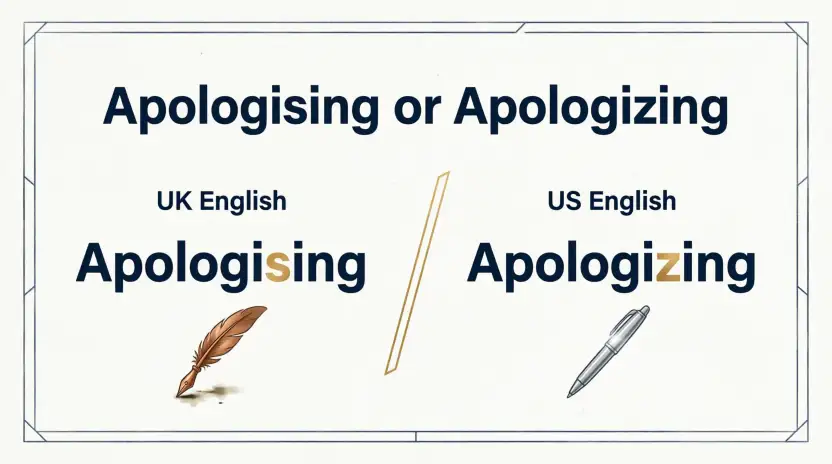
If you are unsure if “apologising” or “apologizing” is correct, the answer depends on the variety of English you are using. Apologising is the standard British English spelling, while apologizing is the standard American English spelling. Both mean the same thing: saying that you are sorry.
This spelling difference can be confusing because English uses both -ise and -ize patterns in different regions. The same difference appears in words such as organising/organizing, realising/realizing, and recognising/recognizing.
The good news is that you do not need to learn two different words. You only need to choose the spelling that matches your audience and writing style. In this guide, you will learn the meaning of both forms, their history, British and American usage, common mistakes, and which version to use in school, business, emails, and everyday writing.
Featured Snippet + AI Overview
Apologising and apologizing are both correct spellings of the same word. Apologising is preferred in British English, while apologizing is preferred in American English. Both are the present participle or gerund form of apologise/apologize, meaning to say that you are sorry. Choose the spelling based on your regional or style preference.
Apologising or Apologizing: Quick Answer
The short answer is simple:
- Apologising = British English spelling
- Apologizing = American English spelling
- Both have the same meaning.
- Neither spelling is a spelling mistake when used in the appropriate English variety.
- Canadian and Australian usage can vary, so local style matters.
Examples
British English:
I am apologising for the delay.
American English:
I am apologizing for the delay.
British English:
She kept apologising for her mistake.
American English:
She kept apologizing for her mistake.
The pronunciation and meaning remain essentially the same. The main difference is the spelling of the ending.
What Does Apologising or Apologizing Mean?
Apologising and apologizing both mean expressing regret or saying that you are sorry for something.
They come from the verbs apologise and apologize.
For example:
He is apologising for being late.
Or:
He is apologizing for being late.
Both sentences say the same thing.
The difference is regional spelling.
Apologising
Apologising is the spelling commonly used in British English.
It is formed from:
apologise + -ing = apologising
Example:
She is apologising to her teacher.
Apologizing
Apologizing is the spelling commonly used in American English.
It is formed from:
apologize + -ing = apologizing
Example:
She is apologizing to her teacher.
What Does “Apologize” Mean?
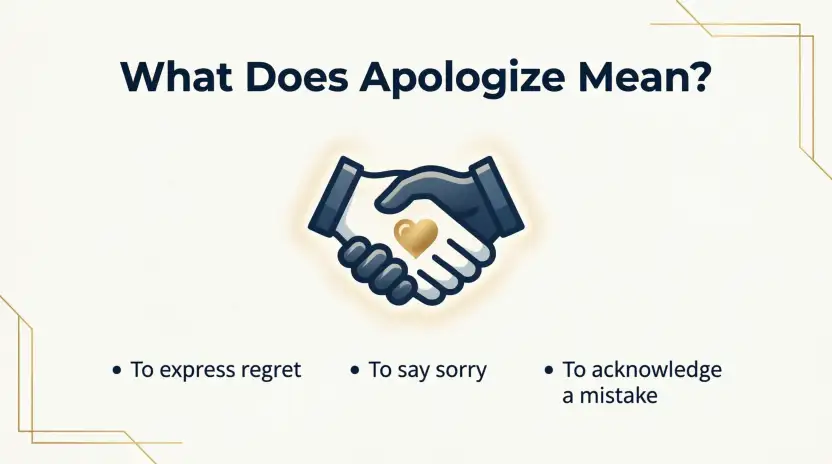
To apologize means to express regret for something you have done or said.
For example:
I apologize for the mistake.
The person is expressing regret.
The Origin of Apologising and Apologizing
The difference between apologising and apologizing is part of a wider spelling pattern in English.
The word apologize ultimately comes from Greek apologia, which referred to a defense or speech made in response to an accusation. English later developed the verb apologize, meaning to make an apology or express regret.
The spelling -ize has a long history in English. British English also uses many words ending in -ise, although -ize remains a recognized spelling in some British publishing systems.
Over time, regional spelling preferences became more established. American English generally favors -ize, while British English commonly uses -ise.
This is why you may see:
- organize / organise
- realize / realise
- recognize / recognise
- apologize / apologise
The meaning does not change because of the spelling.
British English vs American English
The clearest difference is regional preference.
| British English | American English | Example |
| apologising | apologizing | She is apologising/apologizing for the error. |
| apologised | apologized | He apologised/apologized yesterday. |
| apologise | apologize | I apologise/apologize for the delay. |
| apologises | apologizes | She apologises/apologizes often. |
In everyday British writing, apologising is very common.
In American writing, apologizing is the standard form.
A Small Style Guide Note
There is one useful detail to remember. British English does not universally reject -ize spellings. Some British dictionaries and publishers recognize forms such as apologize.
However, apologise/apologising is widely associated with British English and is often the expected choice for British-focused writing.
So, if your goal is to write in a consistent British style, apologising is the safer choice.
Which Version Should You Use?
Your choice should depend on your audience.
United States
Use apologizing.
We are apologizing for the inconvenience.
This matches standard American English spelling.
United Kingdom
Use apologising in writing that follows the common British -ise style.
We are apologising for the inconvenience.
Canada
Canadian English can show influence from both British and American spelling conventions.
For Canadian writing, follow the style guide or publication standard you are using. Consistency is more important than mixing systems.
Australia
Australian English commonly uses British-style spellings such as apologising.
However, specific publishers and organizations may have their own style preferences.
International Writing
For an international audience, either spelling can work.
The key is consistency.
Do not use apologising in one paragraph and apologizing in the next unless you are discussing the spelling difference.
Academic Writing
Follow the required style guide or your institution’s preferred English variety.
If your academic work uses British English, choose apologising.
If it uses American English, choose apologizing.
Business Writing
Use the spelling that matches your company’s language style and target audience.
For a US customer:
We apologize for the inconvenience.
For a UK customer:
We apologise for the inconvenience.
A consistent style makes business writing look more polished.
Common Mistakes
Mistake 1: Calling One Spelling Incorrect Everywhere
Incorrect idea:
“Apologising is always wrong.”
Better understanding:
“Apologising is standard British English.”
Likewise, apologizing is standard American English.
Memory tip:
Think British = -ise and American = -ize for this word.
Mistake 2: Mixing Regional Spellings
You might write:
We are apologising for the error, but we also apologize for the delay.
The sentence is understandable, but the spelling is inconsistent.
For consistent British-style writing:
We are apologising for the error, but we also apologise for the delay.
For consistent American-style writing:
We are apologizing for the error, but we also apologize for the delay.
Mistake 3: Confusing the Verb With the Noun
Apologise/apologize is a verb.
Apology is the noun.
For example:
I apologize for my mistake.
But:
Please accept my apology.
Do not write:
Please accept my apologize.
The correct noun is apology.
Mistake 4: Using “Apologising” in American-Focused Copy
If you are writing for an American website, school, company, or publication, apologizing will usually fit the expected spelling style better.
The same applies in reverse when writing specifically for a British audience.
Everyday Examples
The spelling appears in many types of writing.
Emails
British:
I am apologising for the late reply.
American:
I am apologizing for the late reply.
Business Writing
British:
We sincerely apologise for the inconvenience.
American:
We sincerely apologize for the inconvenience.
News Headlines
A British publication may use:
Company apologising after service disruption
An American publication may use:
Company apologizing after service disruption
The regional spelling changes, but the meaning stays the same.
Blogs
British-style:
Why apologising can help repair a damaged relationship
American-style:
Why apologizing can help repair a damaged relationship
Social Media
British:
Sorry for disappearing. I have been apologising to everyone I missed!
American:
Sorry for disappearing. I have been apologizing to everyone I missed!
Academic Writing
British:
The author is apologising for the limitations of the study.
American:
The author is apologizing for the limitations of the study.
Always follow your institution’s preferred style.
Daily Conversation
British:
I’m apologising because I was wrong.
American:
I’m apologizing because I was wrong.
In speech, the difference is mainly a spelling issue.
Google Trends & Modern Usage
Searches for “apologising or apologizing” are largely driven by people who encounter both spellings and want to know if one is a mistake.
This is a common issue with regional English. People may read British websites, American websites, international news, or content written by different authors. Seeing both forms naturally creates uncertainty.
Modern English continues to use both spellings.
The broad pattern is:
- Apologising is strongly associated with British English.
- Apologizing is strongly associated with American English.
- Both forms are understood internationally.
- Professional writers should keep their regional spelling consistent.
- Search engines can understand both forms, so the main goal should be serving the reader clearly.
Exact search-volume or Google Trends figures should be checked directly in Google Trends for a specific country and time period rather than assumed.
Quick Comparison Table
| Version | Meaning | Correct? | Region | Example |
| Apologising | Saying sorry | Yes | British English | She is apologising. |
| Apologizing | Saying sorry | Yes | American English | She is apologizing. |
| Apologise | Say sorry | Yes | British English | I apologise. |
| Apologize | Say sorry | Yes | American English | I apologize. |
| Apology | Expression of regret | Yes | All major varieties | Please accept my apology. |
Spelling Pattern Comparison
| British Style | American Style |
| apologise | apologize |
| apologises | apologizes |
| apologised | apologized |
| apologising | apologizing |
| organise | organize |
| realise | realize |
| recognise | recognize |
This pattern can help you recognize similar British and American spelling differences.
Key Takeaways
- Apologising and apologizing have the same meaning.
- Apologising is commonly used in British English.
- Apologizing is standard American English.
- Neither form is universally wrong.
- Choose the spelling that matches your audience.
- Keep your spelling consistent throughout an article or document.
- Apology is the noun, while apologise/apologize is the verb.
- For academic and professional writing, follow the required style guide.
FAQs
1. Is apologising or apologizing correct?
Both are correct. Apologising is the common British English spelling, while apologizing is the standard American English spelling. They have exactly the same basic meaning. Your choice should depend on the English variety you are using and the expectations of your audience.
2. Is “apologising” British or American English?
Apologising is commonly associated with British English. It follows the -ise spelling pattern used in many British words. For example, British English commonly uses organising, realising, and recognising as well.
3. Is “apologizing” American English?
Yes. Apologizing is the standard American English spelling. It follows the -ize pattern used in American English, as in organizing, realizing, and recognizing.
4. Is apologising spelled correctly?
Yes. Apologising is a correct spelling. It is widely used in British English and other varieties influenced by British spelling. It is not a spelling error simply because American English uses apologizing.
5. Is apologizing spelled correctly?
Yes. Apologizing is correctly spelled in American English. It is the present participle or gerund form of apologize. American writers normally use apologizing rather than apologising.
6. Do apologising and apologizing mean the same thing?
Yes. Both words mean expressing regret or saying that you are sorry. The only important difference is spelling convention. The meaning, pronunciation, and grammatical role are essentially the same.
7. Should I use apologising in British English?
Generally, yes, if you are following the common British -ise spelling style. For example, you could write, “We are apologising for the delay.” However, always follow the specific style guide required by your publisher, school, or organization.
8. Should I use apologizing in American English?
Yes. Apologizing is the standard choice for American English. For example, an American business email might say, “We are apologizing for the inconvenience.” This spelling fits the broader American -ize pattern.
9. Can I use apologising and apologizing in the same article?
You should normally choose one style and use it consistently. Mixing British and American spellings can make your writing look inconsistent. If your article is specifically explaining the difference, however, showing both forms is completely appropriate.
10. What is the noun form of apologising or apologizing?
The noun is apology. For example, “Please accept my apology for the mistake.” The plural is apologies, as in “She offered her apologies.” Do not use apologize or apologising as the noun in this construction.
Conclusion
Apologising and apologizing are both correct. The difference is mainly regional spelling, not meaning. Apologising is commonly used in British English, while apologizing is the standard American English form.
The easiest way to choose is to think about your reader. Use apologizing for American English content and apologising when following the common British -ise style. For Canadian, Australian, and international writing, check the style guide or publication preference and stay consistent.
Also remember that apology is the noun. You can apologise or apologize, but you make or offer an apology.
Once you understand this simple regional difference, the choice becomes easy. When in doubt, match your spelling to your audience and keep your English style consistent.
Read more about!
- Poliwrath or Politoed: Which Pokémon Is Better for You?
- Güey or Wey: Which Spelling Is Correct?
- Meet or Met: Which One Should You Use?

I’m Olivia Parker, a grammar and English writing enthusiast passionate about making English simple and easy to understand. Through Wordsblog, I share clear explanations, useful grammar tips, and practical writing guidance to help readers write with confidence. My goal is to make learning English easier, one word at a time.







5 thoughts on “Apologising or Apologizing: Which Spelling Is Correct?”