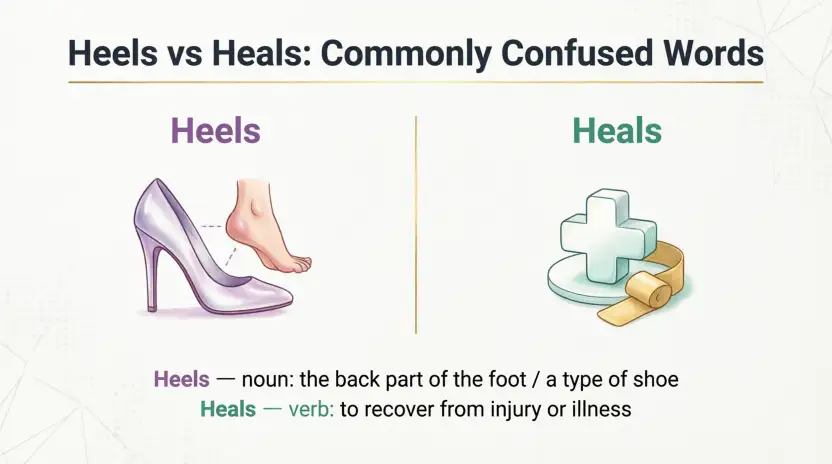
If you are unsure if to write heels or heals, the correct word depends on what you mean. Heels usually refers to the back part of a foot or shoes with raised heels, while heals is the verb form of heal, meaning to become healthy or make something healthy again.
These two words sound exactly alike, which makes them easy to confuse in writing. They are homophones, meaning they have the same pronunciation but different spellings and meanings.
For example, you might say, “She bought a new pair of high heels,” but “Time heals emotional wounds.” The first sentence is about shoes. The second is about recovery.
Understanding the difference is useful for students, ESL learners, writers, and anyone who wants to avoid spelling mistakes. In this guide, you will learn what heels or heals mean, when to use each spelling, common mistakes, regional usage, and simple tricks that make the difference easy to remember.
Heels or Heals: Quick Answer
The easiest way to remember the difference is to look at the meaning.
- Heels = parts of feet or shoes
- Heals = recovers or makes healthy
- Heel = the back part of the foot or a shoe
- Heal = to recover or restore health
Examples of “heels”
- My heels hurt after walking all day.
- She wore black high heels to the event.
- The shoes have very high heels.
Examples of “heals”
- The body heals naturally after a minor injury.
- Time often heals emotional pain.
- The wound slowly heals after treatment.
A simple rule works in most cases:
If you are talking about feet or shoes, use “heels.” If you are talking about recovery, use “heals.”
What Does Heels or Heals Mean?
Although heels and heals sound the same, they belong to different words and have completely different meanings.
What does “heels” mean?
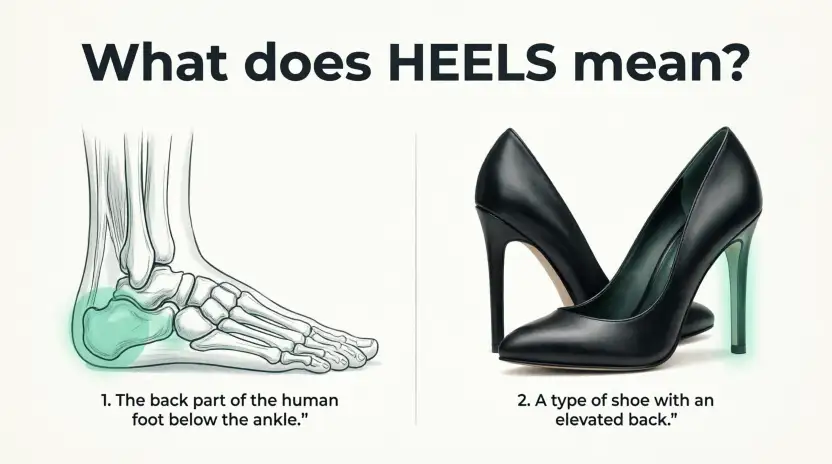
Heels is the plural form of heel. A heel can be the back part of the human foot.
The word can also refer to the raised part of a shoe, especially footwear such as high heels.
Examples:
- My heels are sore.
- These heels are difficult to walk in.
- She bought a pair of red heels.
“Heels” can also appear in other expressions. For example, “at someone’s heels” means following very closely behind someone.
What does “heals” mean?
Heals is the third-person singular form of the verb heal.
To heal means to recover from an injury, illness, or emotional pain. It can also mean to help something recover or become whole again.
Examples:
- The cut heals quickly.
- Exercise can help the body heal.
- Time sometimes heals emotional pain.
The word “heals” is normally used with a singular subject.
For example:
The wound heals slowly.
But with “they,” you would use “heal”:
They heal slowly.
This small grammar point can also help you recognize the correct spelling.
The Origin of Heels or Heals
The two words have different histories even though they sound alike today.
Heel comes from an old English word connected with the rear or back part of the foot. Over time, the word also came to describe the raised part at the back of a shoe.
That is why heels can refer to both parts of the feet and footwear.
Heal, on the other hand, is connected with the idea of becoming whole or healthy again. Its history is related to words associated with health and restoration.
The two words developed separately. Their similar pronunciation is one reason modern English speakers can confuse them.
This is a good example of why English spelling cannot always be predicted from pronunciation. Words can sound identical while having different meanings and spellings.
British English vs American English
There is no major British-American spelling difference between heels and heals. Both forms are used in British and American English with the same basic meanings.
| Meaning | British English | American English | Example |
| Back part of the foot | heels | heels | My heels hurt. |
| Raised part of shoes | heels | heels | She wore high heels. |
| Recovers | heals | heals | The wound heals slowly. |
| Helps recovery | heals | heals | Rest helps while the body heals. |
The confusion is mainly caused by pronunciation, not regional spelling.
In both varieties of English, heels relates to the noun heel, while heals relates to the verb heal.
This means you should not choose the spelling based on if you are writing for a US or UK audience. Choose it based on the meaning of the sentence.
Which Version Should You Use?
Use heels when you are talking about feet, shoes, footwear, or related expressions.
Use heals when you are talking about recovery, health, wounds, or emotional restoration.
United States
American English uses both heels and heals in the same way described above.
- She bought new heels.
- The injury heals with time.
United Kingdom
British English follows the same distinction.
- Her heels were uncomfortable.
- The wound heals slowly.
Canada
Canadian writing also uses heels for feet or shoes and heals for recovery.
Australia
Australian English follows the same basic distinction.
International writing
For international readers, focus on the meaning rather than pronunciation. The same spelling rules apply.
Academic writing
Use heels when discussing anatomy, footwear, or fashion. Use heals when discussing physical or emotional recovery.
Business writing
The same distinction applies in professional emails, reports, websites, and marketing content.
For example:
Our new shoes feature comfortable heels.
But:
The treatment helps the skin heal.
Common Mistakes
Because heels and heals sound alike, writers sometimes use one spelling when they need the other.
Mistake 1: Using “heals” for shoes
Incorrect:
She bought a beautiful pair of black heals.
Correct:
She bought a beautiful pair of black heels.
Why?
The sentence is about shoes, so the correct word is heels.
Memory tip:
Think heel = foot or shoe.
Mistake 2: Using “heels” for recovery
Incorrect:
The injury heels slowly.
Correct:
The injury heals slowly.
Why?
The sentence describes recovery. The verb is heal, so its third-person form is heals.
Memory tip:
Think heal = health.
Mistake 3: Confusing “heal” and “heals”
Remember that heals is used with a singular subject.
- The wound heals.
- The body heals.
- She heals.
But:
- The wounds heal.
- Bodies heal.
- They heal.
This distinction helps you avoid both spelling and grammar errors.
Everyday Examples
Seeing the words in real sentences makes the difference much easier to remember.
Emails
Heels:
I will wear my black heels to the formal dinner.
Heals:
The doctor said the injury should heal with proper care.
Business Writing
Heels:
Our new collection includes comfortable shoes with low heels.
Heals:
The skin gradually heals after the procedure.
News Headlines
Heels:
New Shoe Trends Bring Low Heels Back Into Fashion
Heals:
Patient Heals After Weeks of Treatment
Headlines often leave out extra words, but the meaning still makes the correct spelling clear.
Blogs
Heels:
How to Choose Comfortable Heels for a Long Event
Heals:
How the Body Heals After an Injury
The topic immediately tells you which word to use.
Social Media
Heels:
These heels are perfect for a night out!
Heals:
Give yourself time. The body heals at its own pace.
Academic Writing
Heels:
High heels can change the position of the foot while walking.
Heals:
The body heals damaged tissue through several biological processes.
Academic writing requires careful word choice, so confusing these homophones can make a sentence look less polished.
Daily Conversation
Heels:
My heels hurt after that long walk.
Heals:
Everything heals with time.
The pronunciation is the same, but the meaning makes the spelling different.
Google Trends & Modern Usage
People often search “heels or heals” because these words are homophones. When someone hears one of them in conversation, the correct spelling is not always obvious.
Searches for this phrase can come from several groups:
- Students checking spelling
- ESL learners studying English
- Writers proofreading sentences
- Shoppers searching for footwear
- People writing about injuries or recovery
- Readers checking if “heals” or “heels” is correct
Modern English continues to use both words frequently, but in different contexts.
A useful way to understand their usage is through topic. Fashion, shoes, walking, and feet usually point to heels. Health, injuries, wounds, recovery, and emotional pain usually point to heals.
Exact search-volume or regional trend figures should be checked through a current keyword research tool rather than assumed from general usage patterns.
Quick Comparison Table
| Version | Meaning | Correct? | Region | Example |
| heels | Back parts of the feet | Yes | English worldwide | My heels hurt. |
| heels | Raised parts of shoes | Yes | English worldwide | She wore high heels. |
| heals | Recovers or becomes healthy | Yes | English worldwide | The wound heals slowly. |
| heals | Helps something recover | Yes | English worldwide | Rest heals the body. |
| heals | Shoe spelling | No | None | She bought high heals. |
| heels | Recovery spelling | No | None | The injury heels slowly. |
The key point is that both spellings are correct, but they are not interchangeable.
Key Takeaways
- Heels and heals are both correct English words.
- Heels is the plural of heel.
- Heels can mean the back parts of your feet.
- Heels can also mean the raised parts of shoes.
- Heals is the third-person singular form of heal.
- Heals relates to recovery, health, wounds, or restoration.
- The words sound alike, so they are easy to confuse.
- Think heel = foot or shoe and heal = health.
FAQs
1. Is it “heels” or “heals” for shoes?
The correct spelling is heels when you are talking about shoes. For example, “She bought a new pair of high heels.” The word comes from heel, which can refer to the raised part at the back of a shoe. Heals is related to the verb heal and does not refer to footwear.
2. Is “heals” a correct word?
Yes, heals is a correct English word. It is the third-person singular form of the verb heal. For example, “The wound heals slowly.” It means that something recovers or becomes healthy again. It should not be used when referring to the heels of your feet or shoes.
3. What is the difference between heels and heals?
Heels refers to the back parts of the feet or the raised parts of shoes. Heals means recovers or helps something recover. They have the same pronunciation but different meanings and spellings. The easiest memory trick is heel = foot or shoe, while heal = health and recovery.
4. Are heels and heals homophones?
Yes. Heels and heals are homophones because they are pronounced the same but have different spellings and meanings. Other English homophones include words such as “right” and “write.” Context helps you determine which spelling is correct when you hear the word.
5. How do you spell high heels?
The correct spelling is high heels. For example, “She wore high heels to the party.” High heals is incorrect when referring to shoes. Remember that a shoe has a heel, so the plural form is heels.
6. How do you remember heels vs heals?
Use this simple memory trick: heel = foot or shoe, while heal = health. If the sentence is about footwear or the back of your foot, choose heels. If it is about getting better after an injury or emotional pain, choose heals.
7. Is “my heels hurt” correct?
Yes, “My heels hurt” is correct when you are talking about the back parts of your feet. Because “heels” is plural, the sentence uses hurt rather than “hurts.” For example, “My heels hurt after walking all day.”
8. Is “time heals” correct?
Yes. “Time heals” is grammatically correct. Here, heals comes from the verb heal and means that emotional pain or another difficulty may become less painful over time. The subject “time” is singular, so the verb takes the -s form: heals.
9. Do British people spell heels and heals differently?
No. British English and American English use heels and heals with the same spellings and basic meanings. The difference is not a US-versus-UK spelling issue. You should select the word based on what you mean, not on the variety of English you are using.
10. What is an easy sentence to remember the difference?
Try this sentence: “My heels are in my shoes, and my body heals after an injury.” It connects each spelling with its meaning. Heels relates to feet and shoes, while heals relates to recovery. This simple contrast can help prevent the mistake in future writing.
Conclusion
The difference between heels or heals is simple once you connect each word with its meaning. Heels refers to the back parts of your feet or the raised parts of shoes. Heals comes from the verb heal and describes recovery or the process of becoming healthy again.
The two words are often confused because they sound exactly alike. However, their meanings are very different. If you are writing about fashion, footwear, walking, or feet, use heels. If you are writing about wounds, illness, recovery, or emotional pain, use heals.
This rule works in American, British, Canadian, Australian, and international English. You do not need a different spelling for different English-speaking regions.
The easiest memory trick is heel = foot or shoe, heal = health.
When in doubt, look at the meaning of the sentence before choosing the spelling. Once you make that connection, heels vs. heals becomes an easy distinction to remember.
Read more about!
- Apologising or Apologizing: Which Spelling Is Correct?
- Performa or Proforma: Which Spelling Is Correct?
- Inspite or Despite: The Correct Spelling Explained

I’m Olivia Parker, a grammar and English writing enthusiast passionate about making English simple and easy to understand. Through Wordsblog, I share clear explanations, useful grammar tips, and practical writing guidance to help readers write with confidence. My goal is to make learning English easier, one word at a time.