Choosing between Yoto or Tonies can be tricky when you want a screen-free audio player for a child. Both brands offer stories, songs, and learning content without the need for a smartphone or tablet. However, they use different systems, and those differences can affect how children play, what parents buy, and how much the collection costs over time.
Yoto uses physical audio cards, while Tonies uses small character figures that sit on top of a Toniebox. Both systems are designed to help children listen independently, enjoy stories, and build simple daily routines. Yet one may suit your family better than the other.
The best choice depends on your child’s age, interests, and preferred way to explore audio. You should also consider the initial price, the cost of extra content, portability, and features such as bedtime controls.
In this guide, you will learn how Yoto and Tonies compare, what makes each system different, and which one may offer better value for your family. By the end, you will have a clear way to choose the right player.
Yoto or Tonies: Which Is Better? A Quick Answer
Yoto is often the better choice for families who want audio cards, a broad range of listening options, and features that can support older children. Tonies may suit younger children who enjoy holding character figures and placing them on a player to start a story. Both offer screen-free listening. Your child’s age, favourite content, and your budget should guide your decision.
Yoto or Tonies: Quick Answer
The main difference between Yoto and Tonies is how children choose what to hear.
- Choose Yoto if your child likes cards, audiobooks, music, podcasts, and a player that can grow with changing interests.
- Choose Tonies if your child enjoys familiar characters, physical figures, and a simple play experience.
- Compare both if bedtime routines, travel, independent use, and long-term content costs matter most.
Yoto is not automatically better because it uses cards, and Tonies is not automatically better because it uses figures. The better system is the one your child can use comfortably and will enjoy regularly.
What Does Yoto or Tonies Mean?
Yoto and Tonies are brands that make screen-free audio products for children. They allow children to listen to stories, songs, and other audio without watching a screen.
Although the brands serve a similar purpose, they use different ways to select content.
What Is Yoto?
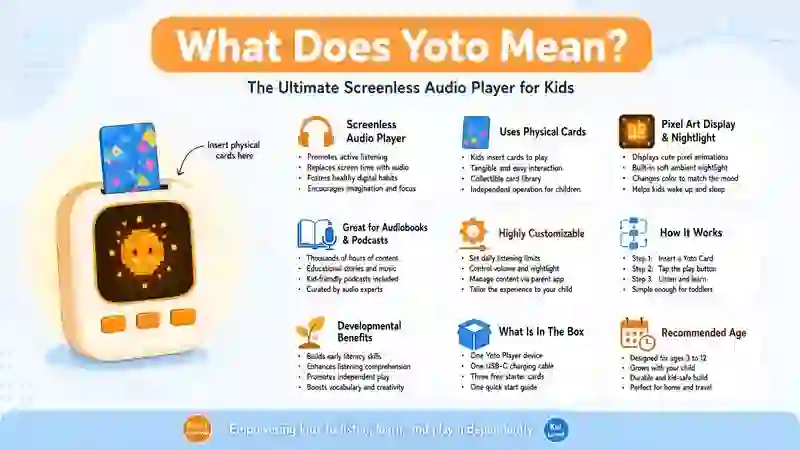
<text>Yoto is a children’s audio platform built around players that use physical Yoto Cards. The current product range includes the Yoto Player and the portable Yoto Mini. The fourth-generation Yoto Player adds a configurable Green Button for quick access to favourite audio, alongside its card-based system.
Children insert a compatible card into the player to start listening. Depending on the content, they can enjoy stories, music, podcasts, educational audio, and other activities.
Yoto also offers features such as a clock, a night light, and bedtime-friendly settings on supported players. Its mix of cards and digital features can make it useful for children whose interests change as they grow.
What Are Tonies?
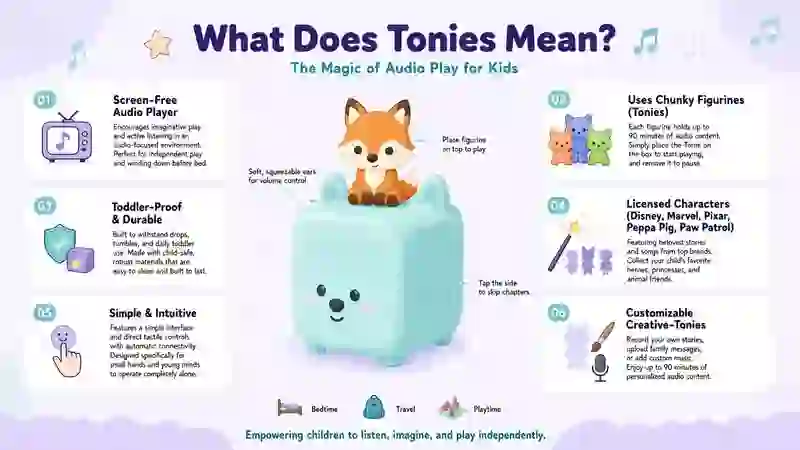
Tonies is a children’s audio brand best known for the Toniebox and its small character figures, called Tonies.
A child places a compatible Tonie figure on the player to start its associated audio. The figure makes the experience feel more like choosing a toy than selecting a track from a screen.
The Toniebox 2 supports stories, songs, and compatible Tonieplay interactive games. It also includes features such as a sleep timer and sunrise alarm. The range is designed for independent listening and hands-on play.
How Are They Different?
The difference comes down to the way children interact with the content.
- Yoto makes physical cards the main way to select audio.
- Tonies uses character figures that children place on the player.
- Yoto may appeal to children who enjoy collecting cards and exploring different types of audio.
- Tonies may appeal to children who connect with familiar characters and like holding their figures.
Both are designed for screen-free use, but their physical formats create different experiences.
The Origin and Development of Yoto and Tonies
Yoto and Tonies developed around the same broad idea: children should be able to enjoy audio without needing a phone or tablet.
Their products use different physical formats to make that possible. Yoto built its experience around audio cards, while Tonies became known for combining a soft player with character figures.
Over time, both brands have expanded beyond basic story playback.
Yoto’s newer players combine card-based listening with features for routines, lighting, and quick access to favourite audio. Tonies has expanded its player range and introduced Tonieplay, which adds compatible interactive games and activities.
These developments show why it is important to compare current models rather than rely on old reviews. A review of an earlier Yoto Player or first-generation Toniebox may not describe the features available in newer products.
For a fair comparison, check the exact model, included accessories, supported content, and current price before buying.
British English vs American English: Does It Matter?
Yoto and Tonies are brand names, not alternative spellings of the same English word. Therefore, the usual British English versus American English spelling rules do not decide which one is correct.
However, regional availability, prices, product bundles, and content libraries may differ. It is worth checking the official store for your country.
| Comparison | Yoto | Tonies |
| Main content format | Yoto Cards | Tonie figures |
| Common product name | Yoto Player | Toniebox |
| Portable option | Yoto Mini | Toniebox Lite |
| Interactive features | Card-based audio and configurable shortcuts on supported models | Tonieplay games on compatible players |
| Best-known appeal | Cards and flexible audio choices | Character figures and hands-on play |
| Regional consideration | Check local model and content availability | Check local model and content availability |
Which Regional Differences Should You Check?
United Kingdom: Compare prices in pounds, local content choices, warranties, and charging requirements.
United States: Check prices in dollars and confirm that the content your child wants is available in the US store.
Canada and Australia: Review local availability, delivery costs, and supported content before ordering.
International buyers: Do not assume that every card, figure, accessory, or digital feature will be available in every country.
The key point is simple: choose the product that works in your region, not just the one that receives the most attention online.
Which Version Should You Use?
Your child’s age and interests matter more than the popularity of either brand. Here is how to choose for different needs.
For Families in the United States
Yoto may be a strong option if you want a card-based library with stories, music, and other audio. Tonies may be a better fit if your child already loves the characters available in the Tonies collection.
Check the current US product pages for pricing, bundles, and included content before making a decision.
For Families in the United Kingdom
Both brands offer products in the UK. Tonies lists the Toniebox 2 and Toniebox Lite, while Yoto offers its own player range. Compare the actual models available locally rather than comparing a newer player from one brand with an older player from the other.
For Canada and Australia
Check shipping fees, replacement accessories, warranty terms, and the availability of suitable content. A product that looks affordable at first may cost more once you include delivery and extra cards or figures.
For Younger Children
Tonies may be appealing to children who enjoy holding figures and recognising familiar characters. Its current Toniebox 2 range is designed for children from age one, according to the manufacturer.
Yoto may also suit young listeners, but check the age guidance for the specific player and content you plan to buy.
For Older Children
Yoto is worth considering if your child enjoys longer stories, audiobooks, music, or podcasts. Its cards and player features may support a wider range of listening interests as children grow.
Tonies can still be a good choice for older children who enjoy its story collections or compatible interactive games.
For Academic and Educational Use
Neither product is a substitute for a teacher or a structured learning programme. However, both can support listening practice, storytelling, vocabulary exposure, and quiet activities.
Choose content that matches your child’s age and learning goals. If the aim is language learning, check that the stories and narration suit your child’s current level.
For Business or Travel Use
These products are primarily designed for children and family use, not business audio playback.
For travel, compare portability, battery life, headphones, durability, and how easily the child can operate the device. A smaller player may be easier to carry, while a home-focused model may offer more useful bedtime features.
Common Mistakes When Comparing Yoto and Tonies
Parents sometimes compare the two brands based on one feature without considering the complete experience. These common mistakes can lead to disappointment.
| Incorrect assumption | Better understanding | Why it matters |
| Yoto and Tonies use the same content format | Yoto uses cards; Tonies uses figures | Their collections are not interchangeable |
| The cheapest starter kit is always the best value | Extra content and accessories add to the cost | Long-term spending may differ |
| All models have the same features | Features vary by model and generation | Older reviews may be outdated |
| Both are completely independent of Wi-Fi in every situation | Initial setup and some content functions may require connectivity | Check the instructions for your model |
| The most popular brand is best for every child | Children have different interests and abilities | The child’s preferences should lead the choice |
How to Avoid These Mistakes
Before you buy, follow these steps:
- Check the exact model. Compare current generations, not just the brand names.
- Check the content. Look for stories, songs, or characters your child already enjoys.
- Calculate the full cost. Include the player, starter content, and likely future purchases.
- Review setup needs. Check Wi-Fi requirements, charging, headphones, and parental controls.
- Think about daily use. Consider if your child prefers cards or physical figures.
A little research can prevent you from buying a player that looks attractive but does not suit your family’s routine.
Everyday Examples: When Yoto or Tonies Makes Sense
The best choice becomes clearer when you consider how a child might use each player during a normal day.
Bedtime
A child who enjoys listening to a long story before sleep may appreciate either system. Compare the sleep settings and content available on the exact model you are considering.
Independent Play
A child who enjoys sorting and selecting cards may prefer Yoto. A child who likes holding a favourite character and placing it on a player may prefer Tonies.
Learning and Listening
Both systems can offer stories, songs, and learning content. Yoto may be especially appealing to families who want to explore different types of audio through cards, while Tonies may make familiar characters part of the listening experience.
Road Trips and Holidays
A portable player can be useful when travelling. Compare the Yoto Mini with the Toniebox options available in your region, and check battery life, size, headphone support, and charging needs.
Gifts
Tonies can be an appealing gift when the recipient loves a particular character. Yoto cards may work well when the child already owns a compatible player and enjoys collecting new audio.
Always check compatibility before buying extra content as a gift.
Google Trends and Modern Usage
People search for “Yoto or Tonies” because they want to compare two similar products before spending money. Common questions include which player is better, which one suits toddlers, which has more content, and which costs less over time.
The search reflects a comparison between two brands rather than a spelling or grammar question. Readers usually want practical buying advice, not simply a list of technical features.
There is no need to assume that one brand is more popular in every country. Search interest can vary by region, season, product launch, and retail availability. Without a verified Google Trends comparison for a defined region and date range, exact popularity rankings or percentages should not be claimed.
Modern product updates also matter. Yoto’s fourth-generation player introduces a configurable Green Button, while the Toniebox 2 offers features including Tonieplay compatibility and bedtime controls. These differences make current-model comparisons more useful than older general reviews.
For buyers, the most useful question is not which name receives more searches. It is which product offers the right mix of content, ease of use, and value for their child.
Yoto or Tonies: Quick Comparison Table
Use this table to compare the main differences at a glance.
| Feature | Yoto | Tonies |
| Main format | Physical audio cards | Character figures |
| Player | Yoto Player | Toniebox |
| Portable option | Yoto Mini | Toniebox Lite |
| How playback starts | Insert a compatible card | Place a compatible figure on the player |
| Content choices | Stories, music, podcasts, learning audio, and more | Stories, songs, learning audio, and compatible games |
| Physical collecting | Cards | Figures |
| Bedtime features | Available on supported models | Available on supported models |
| Interactive games | Depends on the available content and model | Tonieplay on compatible players |
| Best for | Children who enjoy cards and varied audio | Children who enjoy figures and character-led listening |
| Content compatibility | Uses the Yoto ecosystem | Uses the Tonies ecosystem |
Important: Features vary by model, and neither brand’s content is generally interchangeable with the other’s. Confirm the specifications of the exact products before buying.
Key Takeaways
- Yoto and Tonies are both designed for screen-free listening.
- Yoto uses physical cards to select audio.
- Tonies uses character figures that sit on a compatible player.
- Yoto may suit children who enjoy exploring different kinds of audio.
- Tonies may appeal to younger children who love physical figures and familiar characters.
- Compare the current player generations rather than relying on old reviews.
- Consider the total cost of content, accessories, and the player.
- The best option is the one that fits your child’s interests, age, and daily routine.
Frequently Asked Questions About Yoto or Tonies
1. Is Yoto or Tonies better for kids?
Yoto may be better for children who enjoy cards, audiobooks, music, and varied audio content. Tonies may be better for children who enjoy character figures and simple, hands-on controls. Both are designed for screen-free listening. Consider your child’s age, interests, and the content they will use most before choosing.
2. What is the main difference between Yoto and Tonies?
The main difference is how children select audio. Yoto uses physical cards that go into a compatible player. Tonies uses character figures placed on top of a Toniebox. Both offer stories, songs, and other listening options, but each brand has its own content ecosystem.
3. Is Yoto better than Tonies for toddlers?
It depends on the child and the specific model. Toniebox 2 is marketed for children from age one, and its figures may appeal to toddlers who enjoy handling objects. Yoto also offers child-friendly listening products, but parents should check age guidance, card handling, and content suitability before purchasing.
4. Which is cheaper, Yoto or Tonies?
Neither brand is always cheaper. The final cost depends on the player, starter bundle, extra cards or figures, and accessories. Compare the current prices in your country and estimate how much additional content your child is likely to want. A low-priced starter bundle may not offer the best long-term value.
5. Can Yoto cards work on a Toniebox?
No. Yoto Cards are designed for compatible Yoto players, while Tonie figures are designed for compatible Tonies players. The two brands use different systems, so their physical content is not interchangeable. Check compatibility before purchasing cards, figures, or accessories.
6. Does Yoto or Tonies work without Wi-Fi?
Offline playback depends on setup, content downloads, and the specific device. Tonies states that its system can play without Wi-Fi once the relevant content has been downloaded. Yoto also supports offline playback for eligible downloaded content. Check each manufacturer’s current instructions to confirm the requirements for your chosen model.
7. Which is better for bedtime, Yoto or Tonies?
Both can support bedtime listening. Yoto offers bedtime-friendly audio and clock or light features on supported players. Toniebox 2 includes a sleep timer and sunrise alarm. The best choice depends on if you value particular routines, preferred stories, lighting, and the controls available on the model you buy.
8. Is Yoto or Tonies better for older children?
Yoto may be a strong choice for older children who enjoy audiobooks, longer stories, podcasts, and different types of audio. Tonies may remain appealing to children who love its characters or compatible games. Compare the content libraries with your child’s interests instead of relying on age alone.
9. Can children use Yoto and Tonies independently?
Both systems are designed to encourage independent listening, although the ease of use depends on the child’s age and experience. Children may find cards or figures easier to handle based on their preferences and motor skills. Parents should complete setup, review parental controls, and teach children how to operate their chosen player safely.
10. Should I buy Yoto or Tonies as a gift?
Choose Tonies if the child loves a character available in the collection and would enjoy receiving a physical figure. Choose Yoto if the child already has a compatible player or would enjoy exploring audio cards. If the family owns neither system, compare starter bundles, age recommendations, and the cost of building a collection before buying.
Conclusion: Should You Choose Yoto or Tonies?
Choosing between Yoto or Tonies comes down to how your child likes to listen, learn, and play. Both brands offer a screen-free way to enjoy stories, songs, and other audio. However, their different formats create different experiences.
Yoto is worth considering if your child enjoys audio cards, a varied content library, and features that can support changing interests as they grow. Tonies may be the better fit if your child loves familiar characters, enjoys collecting figures, and prefers a simple, hands-on way to start listening.
Before making your decision, compare the latest models, local prices, included content, and extra costs. Think about how the player will fit into your child’s bedtime routine, independent play, and family travel. If possible, let your child try both formats before you buy.
Neither brand is the right choice for every family. The best player is the one your child will enjoy using regularly and that fits your budget.
Remember: Choose the listening experience your child will love, not simply the brand with the most attention. If this guide helped you decide, explore more practical comparisons on Wordsblog.
Read more about!
- Recognized or Recognised: Which Spelling Is Correct?
- 1080i or 1080p: Which Is Better for Your TV?
- CT or MRI: What’s the Difference?

I’m Olivia Parker, a grammar and English writing enthusiast passionate about making English simple and easy to understand. Through Wordsblog, I share clear explanations, useful grammar tips, and practical writing guidance to help readers write with confidence. My goal is to make learning English easier, one word at a time.






3 thoughts on “Yoto or Tonies: Which Audio Player Is Better?”