
When choosing beef, the difference between Choice or Prime mainly comes down to marbling, tenderness, juiciness, and flavor. USDA Prime has more marbling than USDA Choice, which can make Prime beef richer and more tender when cooked properly. USDA Choice is still a high-quality grade and is often a practical option for everyday meals.
This question is common because both Prime and Choice are official USDA quality grades. The names can sound like simple labels for “better” and “good,” but the grading system is more specific than that.
USDA grades beef based on quality traits, including marbling and characteristics related to eating quality. Prime requires more marbling than Choice, while Choice still meets a high quality standard.
So, which one should you buy? That depends on the cut, cooking method, occasion, and how much you value extra marbling. This guide explains Choice and Prime in simple terms so you can make a clear choice at the meat counter.
Choice or Prime: Quick Answer
If you are deciding between Choice or Prime, the simplest answer is this:
- Prime: More marbling, richer eating experience, and often more tenderness and juiciness.
- Choice: Less marbling than Prime, but still high quality and suitable for many cooking methods.
- Prime: Often associated with premium steaks and restaurant service.
- Choice: Commonly used for everyday steaks, roasts, and other beef dishes.
USDA Prime requires at least a slightly abundant degree of marbling in eligible beef carcasses, while USDA Choice requires a lower minimum level of marbling.
For example:
Prime ribeye: More visible fat within the muscle can help create a rich, juicy bite.
Choice ribeye: Still flavorful and tender when properly cooked, but usually has less internal fat.
Prime steak for a special dinner: A common reason someone may select Prime.
Choice steak for a regular meal: A reasonable option when you want quality beef without choosing the higher grade.
The grade is important, but it is not the only thing that affects the final eating experience. The cut, cooking method, preparation, and doneness also matter.
What Does Choice or Prime Mean?
“Choice” and “Prime” are USDA quality grades for beef in the United States.
The USDA Agricultural Marketing Service maintains official beef grading standards. Quality grading evaluates characteristics associated with eating quality, including marbling and maturity.
What is USDA Prime?
USDA Prime is a high quality grade of beef with a higher level of marbling than Choice.
Marbling means the small flecks and threads of fat distributed within the lean meat. Marbling can contribute to flavor, juiciness, and tenderness.
Prime beef is produced from young, well-fed cattle and is commonly found in restaurants and other premium food-service settings.
What is USDA Choice?
USDA Choice is also a high-quality beef grade. It has less marbling than Prime but still meets USDA requirements for the Choice grade.
Choice beef can work very well for steaks, roasts, burgers, and other meals. The exact result depends on the cut and how you cook it.
Why does marbling matter?
Marbling is one of the easiest ways to understand the difference.
More marbling can provide more fat that melts during cooking. This can help meat stay moist and contribute to its flavor and tenderness.
However, more marbling does not automatically mean that every Prime cut will be better for every recipe. A slow-cooked roast and a grilled steak have different needs.
The Origin of Choice or Prime
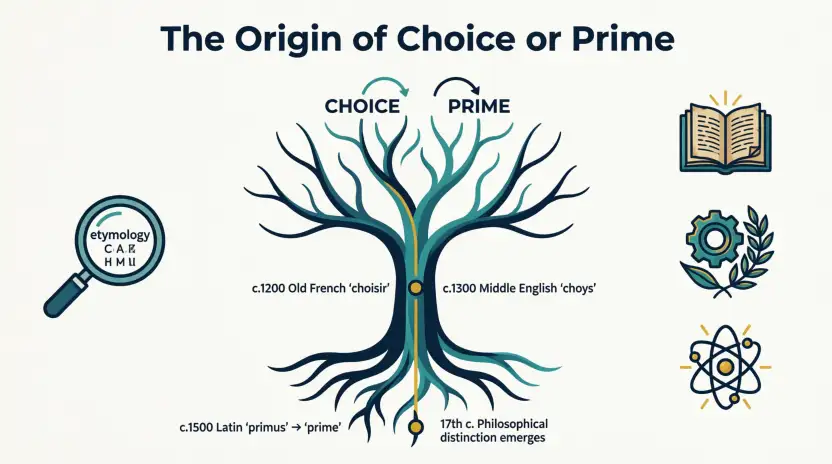
The terms Choice and Prime come from the USDA beef grading system used in the United States.
USDA quality grades provide standardized terms that help buyers and sellers describe beef quality. The official USDA quality grades include Prime, Choice, Select, Standard, Commercial, Utility, Cutter, and Canner.
The grading system is different from a food safety inspection. USDA’s Food Safety and Inspection Service explains that beef is inspected for wholesomeness, while quality grading is a separate voluntary service administered by the Agricultural Marketing Service.
This distinction is important.
A quality grade such as Prime or Choice tells you about the beef’s expected quality characteristics. It does not mean that Prime is “safer” than Choice.
USDA’s current standards focus on characteristics such as marbling, maturity, ribeye characteristics, fat covering, and other carcass factors.
USDA is also reviewing its beef grading standards in 2026 after receiving requests from industry stakeholders for possible updates. The existing Prime and Choice grades remain part of the current USDA system.
British English vs American English
“Choice” and “Prime” are not mainly a British-versus-American spelling issue. In this context, they are USDA beef-grade terms.
The terms can appear in English-language food writing in different countries, but that does not mean other countries use exactly the same grading system.
| Term | US English | UK English | Example |
| USDA Prime | Official US beef quality grade | Usually understood as a US grading term | USDA Prime steak |
| USDA Choice | Official US beef quality grade | Usually understood as a US grading term | USDA Choice beef |
| Prime | Can refer to USDA Prime when clearly labeled | May have a broader meaning depending on context | Prime beef |
| Choice | Can refer to USDA Choice when clearly labeled | May have a general meaning such as selection | Choice cut |
| Marbling | Common food term | Common food term | The steak has good marbling |
For US-focused content, it is best to write USDA Prime and USDA Choice when discussing the official grades.
For international readers, avoid suggesting that the USDA grading system is automatically identical to the beef grading systems used in other countries.
Which Version Should You Use?
The answer depends on where you are buying beef and what you are cooking.
United States
If you are shopping in the United States, USDA Prime and USDA Choice are official beef quality grades.
Look for the USDA grade information on the package or ask the butcher. USDA says Choice has less marbling than Prime but is still a high-quality grade.
United Kingdom
Do not assume that USDA Prime and Choice directly match UK beef classifications.
If you are writing for a UK audience, explain that these are US USDA grades rather than presenting them as universal beef grades.
Canada
Canadian beef has its own grading system. If you are buying beef in Canada, check the Canadian grade and product labeling rather than assuming a USDA Choice or Prime comparison applies in exactly the same way.
Australia
Australia also uses its own beef grading and quality systems. Australian shoppers should use the grading information provided for the local product.
International Writing
For an international audience, write USDA Prime and USDA Choice instead of simply saying “Prime is better.”
This makes the meaning clear and avoids confusion with local grading systems.
Academic Writing
Use the full terms the first time:
USDA Prime and USDA Choice are US beef quality grades.
After that, you can shorten them to Prime and Choice when the context is clear.
Business Writing
Use precise wording, especially for menus, product descriptions, and food marketing.
For example:
USDA Choice ribeye steak
is clearer than:
Choice-quality ribeye
if the product is officially graded USDA Choice.
Common Mistakes
Mistake 1: Thinking Choice means low quality
Incorrect:
“Choice beef is low-grade beef.”
Correct:
“USDA Choice is a high-quality beef grade with less marbling than Prime.”
Explanation:
Choice is not the lowest beef grade. It sits above Select in the USDA retail quality-grade sequence.
Memory tip:
Think Prime = more marbling and Choice = less marbling, but still high quality.
Mistake 2: Thinking Prime means food safety
Incorrect:
“Prime beef is safer than Choice beef.”
Correct:
“Prime and Choice are quality grades, not food safety grades.”
Explanation:
USDA explains that food safety inspection and quality grading are separate processes.
Memory tip:
Grade = quality. Inspection = safety.
Mistake 3: Assuming every Prime steak is identical
Incorrect:
“Every Prime steak will taste exactly the same.”
Correct:
“Prime beef generally has more marbling, but the cut, preparation, cooking method, and doneness also affect the result.”
Explanation:
The USDA grade describes specific quality characteristics. It does not remove all differences between individual cuts.
Mistake 4: Treating Prime and Choice as universal worldwide grades
Incorrect:
“Every country uses USDA Prime and Choice.”
Correct:
“USDA Prime and Choice are part of the US beef grading system.”
Explanation:
Other countries can use different grading systems and terminology.
Everyday Examples
Knowing how to use “Choice” and “Prime” helps when you read menus, grocery labels, recipes, and food articles.
Emails
We are ordering USDA Choice steaks for the company dinner.
Business Writing
Our menu features USDA Prime beef for selected steak dishes.
News Headlines
Restaurants Increase Demand for Premium Beef
A news headline may not always name the USDA grade. The article should explain the grade if it matters to the story.
Blogs
Is USDA Prime worth the extra cost compared with Choice?
This is a natural way to introduce the comparison.
Social Media
Prime or Choice? Which beef grade do you prefer for steak night?
Academic Writing
USDA Prime beef generally has a higher minimum marbling requirement than USDA Choice beef.
Daily Conversation
Should we get Prime or Choice?
Choice should work well for dinner.
Let’s get Prime for the special occasion.
These examples show that the words can be used naturally without treating Choice as poor-quality beef.
Google Trends & Modern Usage
People searching “choice or prime” are usually trying to understand the difference between two beef grades before buying or ordering meat.
Common related searches include:
- Choice or Prime steak
- USDA Choice vs Prime
- Prime vs Choice beef
- Is Prime better than Choice?
- Is USDA Choice good?
- What is USDA Prime beef?
- What does Choice beef mean?
- Prime steak vs Choice steak
- Choice or Prime ribeye
- Which beef grade should I buy?
The confusion is understandable because both terms can appear on grocery labels, restaurant menus, butcher-shop displays, and food websites.
For modern US usage, USDA Prime and USDA Choice are the clearest terms when discussing official beef grades. USDA currently describes Prime as having more marbling than Choice, while Choice remains a high-quality grade.
Exact search-volume or Google Trends numbers should not be assumed without checking current Google Trends data. The discussion here is based on the general search intent and terminology used in official USDA information.
Quick Comparison Table
| Version | Meaning | Correct? | Region | Example |
| USDA Prime | Higher USDA beef quality grade with more marbling | Yes | United States | USDA Prime ribeye |
| USDA Choice | High USDA beef quality grade with less marbling than Prime | Yes | United States | USDA Choice steak |
| Prime beef | Can refer to Prime-grade beef when context is clear | Yes | Mainly US context | Prime beef steak |
| Choice beef | Can refer to Choice-grade beef when context is clear | Yes | Mainly US context | Choice beef roast |
| Prime vs Choice | Comparison between two USDA quality grades | Yes | US-focused writing | Prime vs Choice beef |
USDA’s official standards specify different minimum marbling requirements for Prime and Choice.
Key Takeaways
- USDA Prime has more marbling than USDA Choice.
- Choice is still a high-quality beef grade.
- More marbling can contribute to flavor, juiciness, and tenderness.
- Prime and Choice are quality grades, not food safety grades.
- The cut and cooking method still matter.
- Use USDA Prime and USDA Choice when you need to be precise.
- Other countries may use different beef grading systems.
- For everyday meals, Choice can be a practical option, while Prime may be selected when extra marbling is desired.
FAQs About Choice or Prime
1. Is Prime better than Choice beef?
USDA Prime has a higher level of marbling than USDA Choice. More marbling can contribute to a richer, juicier, and more tender eating experience. Choice is still a high-quality USDA grade. If the extra marbling is useful depends on the cut, cooking method, occasion, and personal preference.
2. What is the difference between Choice and Prime?
The main difference is the amount of marbling required by the USDA grading standards. Prime requires a higher minimum level of marbling than Choice. Marbling is fat distributed within the lean meat, and it can contribute to flavor, juiciness, and tenderness.
3. Is USDA Choice good quality?
Yes. USDA Choice is a high-quality beef grade. It has less marbling than Prime but still meets the USDA requirements for the Choice grade. Choice beef can be used for many steaks, roasts, and other beef dishes.
4. Does Prime beef taste better than Choice?
Prime beef can provide a richer eating experience because it generally contains more marbling. That extra fat can contribute to flavor and juiciness. However, taste also depends on the cut, freshness, seasoning, cooking method, and doneness, so the grade is not the only factor that matters.
5. Is Prime beef more tender than Choice?
Prime generally has characteristics associated with a more tender and juicy eating experience because of its greater marbling. USDA explains that marbling contributes to tenderness, juiciness, and flavor. Still, the specific cut and cooking method can have a major effect on tenderness.
6. Is Choice beef healthier than Prime?
The USDA grade does not by itself provide a simple “healthier” comparison. Prime generally contains more marbling, which means more intramuscular fat. The USDA notes that the protein, vitamin, and mineral content of beef is similar across grades, while fat characteristics can differ.
7. Is Prime beef worth the extra cost?
That depends on what you value. Prime provides a higher level of marbling, which can be useful when you want a richer steak experience. Choice may meet your needs for everyday meals. The best comparison also considers the particular cut, portion size, cooking method, and price.
8. Which is better for steak, Choice or Prime?
Both can work well for steak. Prime has more marbling and may provide greater richness and juiciness. Choice can also produce an excellent steak when you select a suitable cut and cook it properly. Your decision can depend on how much marbling you want and the type of steak you are preparing.
9. Does USDA Choice mean the beef is low quality?
No. USDA Choice is not a low-quality grade. It is an established USDA quality grade with less marbling than Prime. Select is a lower retail quality grade than Choice. The USDA describes Choice as high quality.
10. Are USDA Prime and Choice used worldwide?
No. USDA Prime and Choice are terms from the US beef grading system. Other countries can use different grading standards and labels. When writing for an international audience, identify the USDA system clearly rather than assuming that the terms have exactly the same meaning everywhere.
Conclusion
The choice between Choice or Prime becomes much easier once you understand what the grades describe. USDA Prime has more marbling than USDA Choice, and that extra intramuscular fat can contribute to greater juiciness, flavor, and tenderness. USDA Choice has less marbling but is still considered a high-quality beef grade.
Prime can make sense when you want a richly marbled steak for a special meal. Choice can be a useful option for everyday cooking, especially when you are also considering the cut and cooking method.
One important point is that Prime is not a food safety grade. USDA quality grading and food safety inspection are separate processes.
For US-focused writing, use the precise terms USDA Prime and USDA Choice. For international readers, explain that these are US grading terms because other countries may use different systems.
Remember: Prime and Choice describe beef quality, but the right cut and the right cooking method still make a big difference.
Read more about!
- Nick or Knick: Which Spelling Is Correct?
- Dominant or Recessive: What’s the Difference?
- Yoked or Yolked: Which Word Is Correct?

I’m Olivia Parker, a grammar and English writing enthusiast passionate about making English simple and easy to understand. Through Wordsblog, I share clear explanations, useful grammar tips, and practical writing guidance to help readers write with confidence. My goal is to make learning English easier, one word at a time.







3 thoughts on “Choice or Prime: What’s the Difference?”