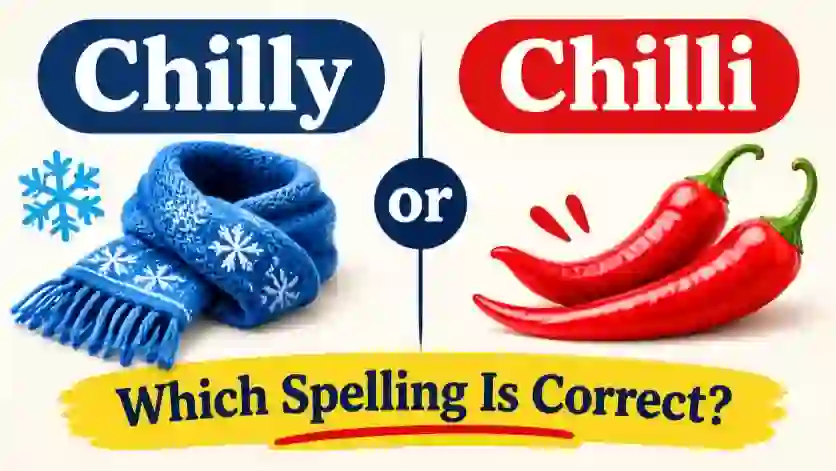
Chilly and chilli are both correct English words, but they have completely different meanings. Chilly means slightly cold or uncomfortably cool, while chilli refers to a hot-tasting pepper used in cooking. The correct choice depends on what you want to describe.
These words are easy to confuse because they look and sound similar. However, using the wrong spelling can change the meaning of your sentence. In this guide, you will learn the meanings, spelling differences, regional variations, and examples of chilly and chilli.
Quick Answer: Chilly vs. Chilli
- Chilly: Means cold or slightly cold.
- Chilli: A spicy pepper used in food.
- Pronunciation: Both are generally pronounced the same.
- British English: Commonly uses chilli for the pepper.
- American English: Commonly uses chili for the pepper.
- Correct usage: Use chilly for cold weather and chilli for the pepper in British English.
Examples:
- It is chilly outside today.
- She added chilli to the soup.
What Does Chilly Mean?
Chilly is an adjective that describes weather, air, or a place that feels slightly cold.
It can also describe a person’s attitude or behavior when someone seems unfriendly or distant.
Examples:
- It was chilly when we left the house.
- The chilly wind made everyone wear jackets.
- I felt chilly after walking in the rain.
- She gave me a chilly response.
- The room became chilly after sunset.
In everyday English, chilly usually describes mild or uncomfortable cold rather than freezing temperatures.
What Does Chilli Mean?
Chilli is a noun that refers to a hot pepper used to add heat and flavor to food.
Chillies come in different shapes, sizes, colors, and levels of spiciness. Some are mild, while others are extremely hot.
Examples:
- I added a red chilli to the curry.
- Fresh chillies make the sauce spicy.
- She prefers green chilli with her meals.
- The recipe requires two dried chillies.
- He grows chilli plants in his garden.
In British English, chilli is a common spelling for the pepper.
Chilly vs. Chilli: Key Differences
| Feature | Chilly | Chilli |
| Part of speech | Adjective | Noun |
| Meaning | Slightly cold | A spicy pepper |
| Main use | Weather, temperature, attitude | Cooking and food |
| Pronunciation | CHIL-ee | CHIL-ee |
| Example | A chilly morning | A fresh chilli |
| American spelling | Chilly | Chili |
| British spelling | Chilly | Chilli |
The most important difference is their meaning. Chilly describes coldness, while chilli names a type of pepper.
Chilli, Chili, or Chile: Which Spelling Is Correct?
The spelling of the pepper changes depending on regional and language conventions.
| Spelling | Common Usage |
| Chilli | British English and many other varieties |
| Chili | American English |
| Chile | Common in Spanish and used in some English contexts |
All three spellings can refer to the hot pepper, although chilli and chili are the most familiar English forms in their respective regions.
For example:
- British English: I bought some fresh chillies.
- American English: I bought some fresh chilies.
Important: Chilly is different from all three. It always describes coldness in ordinary English.
When Should You Use Chilly?
Use chilly when describing cold weather, cool temperatures, or an unfriendly attitude.
Common situations include:
1. Weather
- The morning was chilly.
- It feels chilly outside.
2. Places and Rooms
- The basement is chilly.
- The house felt chilly without heating.
3. People’s Behavior
- He gave me a chilly welcome.
- Her response sounded chilly.
When Should You Use Chilli?
Use chilli when referring to the pepper or an ingredient made from it in British English.
Common situations include:
1. Cooking
- Add one chopped chilli to the pan.
- The soup needs more chilli.
2. Food Ingredients
- Fresh chillies add flavor to the dish.
- The recipe uses dried chilli flakes.
3. Gardening
- She grows chilli plants at home.
- The garden has several varieties of chilli peppers.
Common Mistakes When Using Chilly and Chilli
| Incorrect Sentence | Correct Sentence |
| The weather is chilli today. | The weather is chilly today. |
| Add some chilly to the curry. | Add some chilli to the curry. |
| I feel chilli outside. | I feel chilly outside. |
| She bought fresh chilly peppers. | She bought fresh chilli peppers. |
| The room was chilli. | The room was chilly. |
Remember that chilly describes temperature, while chilli refers to the pepper.
Chilly or Chilli: Example Sentences
Here are more examples to help you understand the difference.
Examples with chilly:
- The chilly weather made us stay indoors.
- I need a warm coat because it is chilly outside.
- A chilly breeze came through the window.
- The evening became chilly after sunset.
- His chilly attitude surprised everyone.
Examples with chilli:
- She added fresh chilli to the pasta.
- The red chilli made the sauce very hot.
- I bought green chillies from the market.
- He sprinkled chilli flakes over his pizza.
- The recipe calls for three dried chillies.
Quick Comparison: Chilly vs. Chilli
| Question | Answer |
| Is chilly correct? | Yes |
| Is chilli correct? | Yes |
| Does chilly mean cold? | Yes |
| Does chilli mean pepper? | Yes |
| Which spelling is British? | Chilli |
| Which spelling is American? | Chili |
| Do chilly and chilli sound alike? | Generally, yes |
| Can they be used interchangeably? | No |
Key Takeaways
- Chilly and chilli are both correct words.
- Chilly means slightly cold.
- Chilli means a hot pepper used in cooking.
- Chilly is an adjective.
- Chilli is a noun.
- British English commonly uses chilli.
- American English commonly uses chili.
- Chile is another spelling used for the pepper.
- Never use chilly when you mean the pepper.
Frequently Asked Questions
1. Is it chilly or chilli?
Both are correct words, but they have different meanings. Chilly means slightly cold, while chilli refers to a spicy pepper.
2. What does chilly mean?
Chilly means slightly cold or uncomfortably cool. It can also describe someone who behaves in an unfriendly or distant way.
3. What does chilli mean?
Chilli is a hot pepper used in cooking to add heat and flavor to food.
4. Is chilli British or American?
Chilli is the common British English spelling. American English generally uses chili.
5. Is chili or chilli correct?
Both spellings are correct for the pepper. Chili is preferred in American English, while chilli is common in British English.
6. Are chilly and chilli pronounced the same?
Yes. They are generally pronounced the same way, even though their meanings and spellings are different.
7. What is the plural of chilli?
The plural of chilli is chillies in British English. In American English, the plural of chili is usually chilies.
8. Can chilly describe a person’s behavior?
Yes. Chilly can describe an unfriendly, distant, or cold attitude toward another person.
9. Is it chilly weather or chilli weather?
Chilly weather is correct because the word describes cold temperatures. Chilli weather is incorrect in this context.
10. Is it chilly sauce or chilli sauce?
Chilli sauce is the correct spelling in British English. Chili sauce is commonly used in American English.
Conclusion
The difference between chilly and chilli is simple once you understand their meanings. Chilly describes cold weather, cool temperatures, or an unfriendly attitude. Chilli refers to the spicy pepper commonly used in cooking.
If you are writing in British English, use chilli for the pepper. If you are writing in American English, use chili. However, chilly keeps the same spelling in both varieties when describing something cold. Remembering this distinction will help you avoid confusion in everyday conversations, recipes, and professional writing.
Read more about!
- Paper or Plastic: Which Is Better for Shopping Bags?
- Cesium or Caesium: Which Spelling Is Correct?
- Lowe’s Roseburg, OR: Store Location, Phone Number, and Services

I’m Olivia Parker, a grammar and English writing enthusiast passionate about making English simple and easy to understand. Through Wordsblog, I share clear explanations, useful grammar tips, and practical writing guidance to help readers write with confidence. My goal is to make learning English easier, one word at a time.