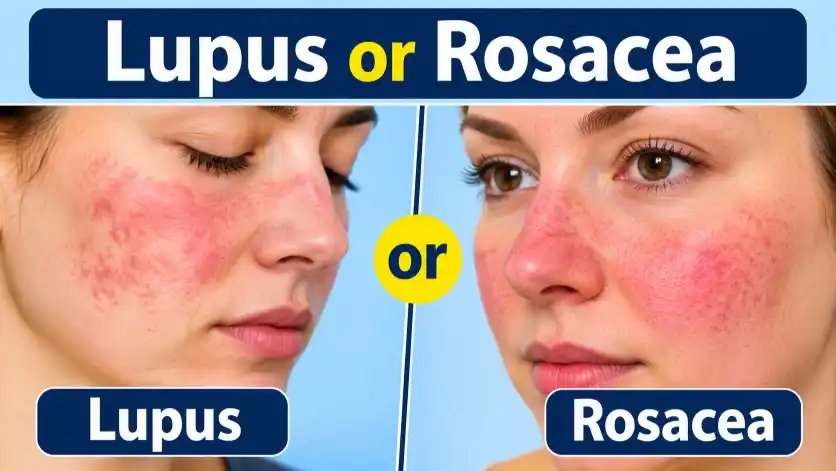
Lupus and rosacea are two different medical conditions that can cause redness and changes in the skin, especially on the face. However, lupus is an autoimmune disease that can affect several parts of the body, while rosacea is a chronic skin condition that mainly affects the face.
Many people search for “lupus or rosacea” because both conditions can cause redness across the cheeks and nose. Their symptoms may look similar, making it difficult to understand which condition someone might have.
However, there are important differences in their causes, symptoms, triggers, diagnosis, and treatment.
In this guide, you will learn what lupus and rosacea mean, how their symptoms differ, why they are sometimes confused, and when to seek medical advice. You will also discover how doctors diagnose and manage each condition.
Quick Answer
- Lupus: An autoimmune disease in which the immune system mistakenly attacks healthy tissue. It can affect the skin, joints, kidneys, and other organs.
- Rosacea: A long-term inflammatory skin condition that mainly affects the face, causing redness, flushing, visible blood vessels, and sometimes acne-like bumps.
Both conditions can cause a butterfly-shaped facial rash. However, a facial rash alone cannot confirm either diagnosis.
Lupus vs. Rosacea: Key Differences
The biggest difference between lupus and rosacea is how they affect the body.
Lupus is an autoimmune condition that can affect multiple organs and body systems. Rosacea mainly affects the skin and sometimes the eyes.
Although both can cause facial redness, their other symptoms can help doctors distinguish between them.
| Feature | Lupus | Rosacea |
| Condition type | Autoimmune disease | Chronic inflammatory skin condition |
| Main affected areas | Skin, joints, kidneys, and other organs | Mainly the face and eyes |
| Facial redness | Can cause a butterfly-shaped rash | Can cause persistent redness and flushing |
| Skin bumps | Some types cause skin lesions | May cause acne-like bumps |
| Joint pain | Common symptom | Not a typical symptom |
| Fatigue | Can be significant | Not a defining symptom |
| Sun sensitivity | Common | Sunlight can trigger flare-ups |
| Visible blood vessels | Not a typical feature | Common |
| Diagnosis | Blood tests, examination, and other investigations | Mainly skin and eye examination |
| Treatment | Depends on the organs and symptoms affected | Skincare, medication, and trigger management |
The important point is that facial redness alone cannot tell you if someone has lupus or rosacea. Doctors consider the complete pattern of symptoms and medical history.
What Does a Lupus Rash Look Like?
A lupus rash can appear in different forms, depending on the type of lupus and the skin affected.
One of the best-known signs is the butterfly rash, also called a malar rash.
It usually appears across the cheeks and bridge of the nose, creating a butterfly-like shape.
Common features of a lupus rash include:
- Red or discoloured patches across the cheeks and nose.
- Skin changes after exposure to sunlight.
- Rashes on other exposed parts of the body.
- Scaly or raised skin patches in some types of lupus.
- Changes in skin colour after a rash heals.
Not everyone with lupus develops a butterfly rash. Some people experience other skin problems or symptoms without noticeable facial redness.
Lupus can also cause symptoms beyond the skin, including joint pain, fatigue, mouth ulcers, and hair loss.
If you notice a persistent butterfly-shaped rash, especially alongside other symptoms, arrange a medical assessment.
What Does Rosacea Look Like?
Rosacea is a long-term skin condition that mainly affects the centre of the face.
It commonly appears on the cheeks, nose, forehead, and chin. Symptoms may come and go, although some people experience persistent redness.
Common signs of rosacea include:
- Redness across the cheeks and nose.
- Frequent flushing or blushing.
- Small visible blood vessels.
- Red bumps that may resemble acne.
- Burning or stinging sensations.
- Dry or sensitive skin.
- Eye irritation in some cases.
Rosacea can look different from person to person. Some people mainly experience facial redness, while others develop bumps, swelling, or eye symptoms.
Certain factors can make rosacea worse. These may include sunlight, hot drinks, spicy foods, emotional stress, and changes in temperature.
Rosacea is not contagious, and it is not caused by poor hygiene.
Why Are Lupus and Rosacea Often Confused?
Lupus and rosacea are sometimes confused because both conditions can affect the cheeks and nose.
Their facial redness may look similar, especially when someone develops a butterfly-shaped rash.
However, several details can help explain the difference.
1. Similar facial redness
Both conditions can cause redness across the central face. This is one of the main reasons people confuse them.
2. Sun sensitivity
Sunlight can trigger skin symptoms in both conditions. However, sunlight sensitivity is a particularly important feature of lupus.
3. Different additional symptoms
Lupus may cause joint pain, extreme fatigue, mouth ulcers, and problems involving internal organs.
Rosacea mainly causes skin symptoms, although it can also affect the eyes.
4. Different skin changes
Rosacea commonly causes visible blood vessels and acne-like bumps. These are not typical features of a lupus butterfly rash.
5. Different underlying causes
Lupus involves an abnormal immune response against the body’s own tissues. The exact cause of rosacea is not fully understood, but inflammation and environmental factors play a role.
Because the conditions overlap in appearance, a healthcare professional may need to investigate further before making a diagnosis.
Lupus vs. Rosacea: Common Triggers
Triggers are factors that can start or worsen symptoms.
Lupus and rosacea have some triggers in common, but they do not affect everyone in the same way.
Common Lupus Triggers
Some factors associated with lupus flare-ups include:
- Sunlight and ultraviolet exposure.
- Certain infections.
- Physical or emotional stress.
- Some medications.
- Hormonal changes.
Not every person with lupus experiences the same triggers.
Common Rosacea Triggers
Rosacea symptoms may become worse because of:
- Hot weather.
- Cold temperatures.
- Sun exposure.
- Spicy foods.
- Hot drinks.
- Alcohol.
- Emotional stress.
- Intense exercise.
Keeping a symptom diary can help people identify patterns and understand what makes their symptoms worse.
Important: A trigger does not confirm a diagnosis. For example, facial redness after sunlight exposure can occur with both conditions.
How Is Lupus Diagnosed?
Diagnosing lupus can be difficult because its symptoms often resemble those of other medical conditions.
Doctors usually consider a person’s symptoms, medical history, physical examination, and laboratory results.
Common diagnostic investigations include:
1. Blood tests
Doctors may order blood tests to look for antibodies associated with lupus, including antinuclear antibodies (ANA).
An ANA result alone does not confirm lupus. It must be interpreted alongside other clinical findings.
2. Urine tests
Urine tests can help doctors check for signs of kidney problems.
3. Kidney function tests
Blood tests may be used to assess how well the kidneys are working.
4. Physical examination
Doctors may check for joint swelling, skin changes, mouth ulcers, and other symptoms.
5. Additional investigations
Depending on the symptoms, doctors may recommend imaging, specialist assessments, or other tests.
There is no single test that confirms every case of lupus. Diagnosis requires a combination of clinical information and appropriate investigations.
How Is Rosacea Diagnosed?
Rosacea is usually diagnosed through a skin examination and a discussion about symptoms.
Unlike lupus, there is no specific blood test that confirms rosacea.
A doctor or dermatologist may:
- Examine the cheeks, nose, forehead, and chin.
- Look for persistent redness and visible blood vessels.
- Check for acne-like bumps and skin irritation.
- Ask about flushing and possible triggers.
- Examine the eyes if irritation is present.
- Consider other conditions that may look similar.
Sometimes, additional tests are needed to rule out conditions such as lupus.
A dermatologist may also recommend a skin biopsy in certain unusual cases.
The diagnosis depends on the overall appearance of the skin, symptoms, and medical history.
Lupus vs. Rosacea: Treatment Options
Lupus and rosacea require different treatment approaches because they have different underlying causes.
Treatment also depends on the severity of symptoms and how much the condition affects daily life.
Lupus Treatment
There is currently no cure for lupus, but treatment can help control symptoms and reduce inflammation.
Common treatment options include:
- Hydroxychloroquine: Often used to help control lupus symptoms and reduce flare-ups.
- Corticosteroids: May be prescribed to reduce inflammation.
- Immunosuppressants: Used in certain cases to control an overactive immune response.
- Biologic medicines: May be recommended for some people with more difficult-to-control lupus.
- Sun protection: Helps reduce the risk of sunlight-related skin symptoms.
The treatment plan depends on which parts of the body are affected.
Rosacea Treatment
Rosacea also has no permanent cure, but several treatments can help control symptoms.
Common options include:
- Prescription creams and gels: Help reduce redness and inflammatory bumps.
- Oral antibiotics: May be prescribed for moderate or severe symptoms.
- Gentle skincare: Helps reduce irritation.
- Sun protection: Helps prevent sunlight-related flare-ups.
- Laser or light treatments: May reduce visible blood vessels and persistent redness.
Treatment can take time, and some people need long-term symptom management.
Neither condition should be treated using prescription medication without appropriate medical advice.
When Should You See a Doctor?
Facial redness does not always indicate a serious medical condition. However, persistent or unexplained skin changes should not be ignored.
Consider arranging a medical appointment if you experience:
- A butterfly-shaped rash across your cheeks and nose.
- Frequent or unexplained facial redness.
- Joint pain or swelling.
- Unusual or persistent fatigue.
- Mouth or nose ulcers.
- Hair loss alongside other unexplained symptoms.
- Skin changes that become worse after sunlight exposure.
These symptoms do not automatically mean you have lupus or rosacea. A healthcare professional can investigate the possible causes.
Seek urgent medical advice
If you have rosacea and experience a painful red eye, blurred vision, or sensitivity to light, seek urgent medical assessment. These symptoms can indicate an eye complication.
If you experience severe chest pain, difficulty breathing, or sudden neurological symptoms, seek emergency medical help.
NHS
+2
Key Takeaways
Here are the most important differences between lupus and rosacea:
- Lupus is an autoimmune disease that can affect several parts of the body.
- Rosacea is a chronic inflammatory skin condition that mainly affects the face.
- Both conditions can cause redness across the cheeks and nose.
- Lupus may cause joint pain, fatigue, hair loss, and other systemic symptoms.
- Rosacea commonly causes flushing, visible blood vessels, and acne-like bumps.
- Sunlight can worsen both conditions.
- Lupus diagnosis usually involves blood tests and other medical investigations.
- Rosacea is generally diagnosed through skin examination and medical history.
- Both conditions can be managed with appropriate treatment.
The biggest difference is that lupus can affect internal organs, while rosacea mainly affects the skin and sometimes the eyes.
Frequently Asked Questions
1. Is lupus the same as rosacea?
No. Lupus is an autoimmune disease, while rosacea is a chronic inflammatory skin condition. Both can cause facial redness, but they have different causes and symptoms.
2. Can rosacea be mistaken for lupus?
Yes. Rosacea can sometimes resemble the butterfly-shaped facial rash associated with lupus. Doctors may perform additional examinations and tests to distinguish between them.
3. What does a lupus butterfly rash look like?
A lupus butterfly rash usually appears across the cheeks and bridge of the nose. It creates a butterfly-like pattern and may become more noticeable after sun exposure.
4. Does rosacea cause joint pain?
Joint pain is not a typical symptom of rosacea. Persistent joint pain alongside facial redness may require medical investigation for another condition, including lupus.
5. Can lupus cause facial redness?
Yes. Lupus can cause facial redness, particularly through a malar or butterfly-shaped rash across the cheeks and nose.
6. Does rosacea get worse in the sun?
Yes. Sun exposure is a common rosacea trigger. It can increase facial redness, flushing, and skin irritation.
7. How do doctors tell the difference between lupus and rosacea?
Doctors examine the skin, review symptoms, and consider medical history. They may also order blood tests to investigate lupus or additional tests to rule out other skin conditions.
8. Can you have lupus and rosacea at the same time?
Yes. Having one condition does not automatically prevent someone from developing the other. A medical professional can investigate overlapping symptoms and determine if both conditions are present.
9. Is lupus more serious than rosacea?
Lupus can be more serious because it may affect important organs, including the kidneys, heart, and lungs. Rosacea mainly affects the skin and sometimes the eyes. However, the severity of either condition varies.
10. Can lupus or rosacea be cured?
Neither condition currently has a permanent cure. However, appropriate treatments can help control symptoms, reduce flare-ups, and improve quality of life.
Conclusion
When comparing lupus or rosacea, it is important to understand that these are two different medical conditions, even though they can cause similar facial redness.
Lupus is an autoimmune disease that can affect the skin, joints, kidneys, and other organs. Rosacea is a chronic skin condition that mainly causes facial redness, flushing, visible blood vessels, and sometimes acne-like bumps.
The butterfly-shaped rash is one reason people confuse these conditions. However, other symptoms, medical history, and appropriate tests help doctors distinguish between them.
Both conditions can be managed with the right medical care. If you notice persistent facial redness, unexplained fatigue, joint pain, or other unusual symptoms, consult a healthcare professional rather than trying to diagnose yourself.
Understanding the differences between lupus and rosacea can help you recognize possible warning signs and make more informed decisions about your health.
Read more about!
- Silencer or Suppressor: What’s the Difference?
- Azure or AWS: What’s the Difference and Which Is Better?
- Proved or Proven: Which Is Correct? (Meaning and Examples)

I’m Olivia Parker, a grammar and English writing enthusiast passionate about making English simple and easy to understand. Through Wordsblog, I share clear explanations, useful grammar tips, and practical writing guidance to help readers write with confidence. My goal is to make learning English easier, one word at a time.